 By Patricia Jones
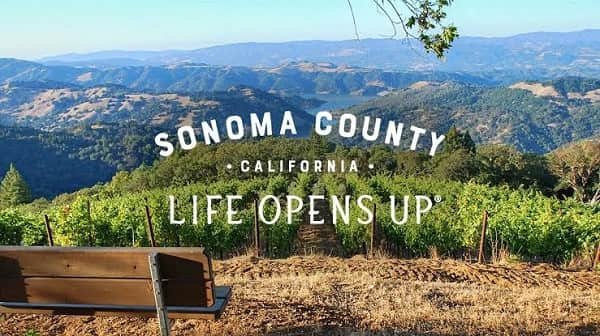
 Sonoma County is a large and economically diverse county in California’s North Bay. It stretches from the Pacific coast and redwood forests to the Russian River, vineyard valleys, suburban communities and the urban centre of Santa Rosa. The county is widely associated with wine and tourism, but its economy also depends on healthcare, manufacturing, construction, agriculture, education, retail, professional services and government.
Santa Rosa is the county seat and the main centre of county administration, courts, healthcare and employment. Petaluma, Rohnert Park, Windsor, Healdsburg, Sonoma, Sebastopol, Cotati and Cloverdale form the rest of the county’s incorporated municipal network. Large unincorporated areas include coastal settlements, Russian River communities, agricultural valleys and rural mountain districts.
Sonoma County combines a strong visitor economy with serious public-policy challenges. Housing affordability, wildfire safety, water supply, ageing infrastructure, climate resilience and the delivery of services to dispersed rural communities are continuing priorities for county government.
Quick Overview of Sonoma County
| Category | Details |
| State | California |
| Region | North Bay, northern San Francisco Bay Area |
| County seat | Santa Rosa |
| Established | 1850 |
| Estimated population | 486,444 in 2025 |
| Land area | Approximately 1,575.63 square miles |
| Incorporated municipalities | Nine cities and towns |
| Governing body | Five-member Board of Supervisors |
| Board chair | Rebecca Hermosillo |
| Board vice-chair | Chris Coursey |
| County executive | David Guhin |
| Main trial court | Superior Court of California, County of Sonoma |
| Superior Court presiding judge | Judge Christopher Honigsberg |
| Assistant presiding judge | Judge Shelly J. Averill |
| Court executive officer | Robert Oliver |
| Sheriff-coroner | Eddie Engram |
| District attorney | Carla Rodriguez |
| Clerk-recorder-assessor | Deva Marie Proto |
| Auditor-controller-treasurer-tax collector | Erick Roeser |
| Registrar of voters | Evelyn Mendez |
| County-owned commercial airport | Charles M. Schulz-Sonoma County Airport |
| Major economic sectors | Healthcare, wine and agriculture, tourism, manufacturing, construction, retail and public services |
The U.S. Census Bureau estimated Sonoma County’s population at 486,444 in July 2025. That was approximately 0.5% below the April 2020 estimates base. The county therefore remains close to half a million residents, although recent growth has been slower than in many inland California counties.
Location and Geographic Structure
Sonoma County occupies the north-western portion of the San Francisco Bay Area. Mendocino County lies to the north, Lake and Napa counties are to the east, Solano County is across the south-eastern boundary, Marin County is to the south and the Pacific Ocean forms the western edge.
The county covers about 1,575.63 square miles of land. Its physical character changes sharply from west to east and from the coast to the interior. Major geographic areas include:
- The rugged Pacific coastline around Bodega Bay, Jenner and The Sea Ranch
- Redwood and mixed-forest country along the lower Russian River
- The Santa Rosa Plain and the central U.S. Highway 101 urban corridor
- The agricultural and vineyard valleys around Healdsburg, Sonoma, Sebastopol and Petaluma
- The Mayacamas Mountains and upland areas near the Napa and Lake county boundaries
- The Petaluma River, Sonoma Creek and wetlands leading towards San Pablo Bay
Important natural features include the Russian River, Lake Sonoma, Bodega Bay, Sonoma Mountain, Taylor Mountain, Hood Mountain, the Mayacamas range, Armstrong Redwoods, the Laguna de Santa Rosa and long stretches of protected coast.
U.S. Highway 101 is the county’s principal north-south route. State Routes 1, 12, 37, 116, 121 and 128 connect the coast, wine valleys, rural communities and neighbouring counties. The Sonoma-Marin Area Rail Transit system, commonly called SMART, provides passenger rail service along the Highway 101 corridor and links Sonoma County with Marin County.
Cities, Towns and Communities
Sonoma County has nine incorporated municipalities:
- Cloverdale
- Cotati
- Healdsburg
- Petaluma
- Rohnert Park
- Santa Rosa
- Sebastopol
- Sonoma
- Windsor
Santa Rosa is by far the largest city and contains the main county government complex, major hospitals, the principal court facilities, higher-education campuses and a large share of the county’s employment. Petaluma is an important southern gateway with a historic downtown, manufacturing, food businesses and access to Marin County. Rohnert Park and Cotati form a closely connected residential and educational area around Sonoma State University.
Healdsburg, Sonoma and Sebastopol are closely associated with agriculture, food, wine and visitor activity. Windsor is a growing residential and employment centre north of Santa Rosa, while Cloverdale serves northern Sonoma County and the Highway 101 corridor towards Mendocino County.
Significant unincorporated communities include Bodega Bay, Cazadero, Forestville, Geyserville, Glen Ellen, Graton, Guerneville, Jenner, Kenwood, Monte Rio, Occidental, Penngrove, Sea Ranch, Sonoma Valley communities and rural areas surrounding the incorporated cities.
Municipal governments generally manage local streets, policing, parks, planning and building services within city limits. Permit Sonoma and other county departments handle many land-use, building, code-enforcement and infrastructure duties in unincorporated areas.
The county is also home to sovereign tribal governments. These include the Federated Indians of Graton Rancheria, the Kashia Band of Pomo Indians of the Stewarts Point Rancheria and the Dry Creek Rancheria Band of Pomo Indians. Tribal lands and governments have separate legal authority and should not be treated as ordinary unincorporated county communities.
Population and Housing
Sonoma County’s population has remained broadly stable since 2020. Housing costs, wildfire losses, an ageing population and migration patterns have affected growth. The county has a substantial older population: approximately 24.2% of residents are aged 65 or above, while about 18.1% are under 18.
Important population, housing and income indicators include:
- Median household income: $104,674
- Per-capita income: $56,640
- Residents below the poverty line: 8.4%
- Average journey to work: 25.1 minutes
- Adults with a bachelor’s degree or higher: approximately 38.5%
- Owner-occupied housing rate: approximately 62.6%
- Median value of owner-occupied housing: approximately $815,500
- Median gross monthly rent: approximately $2,158
Housing ranges from urban apartments and suburban neighbourhoods to rural homes, vineyards, coastal properties, mobile-home communities and historic town centres. High purchase prices and rents place pressure on workers, families, older residents and lower-income households. Housing supply is also shaped by environmental constraints, wildfire risk, water and wastewater capacity, traffic conditions and the need to protect agricultural land.
The county’s demographic and housing patterns create demand for healthcare, public transport, affordable housing, emergency preparedness, home-care services and accessible community facilities. They also influence workforce recruitment for schools, hospitals, public agencies, restaurants, farms and other employers.
Economy and Employment
Sonoma County has a broad regional economy rather than a single dominant industry. The Census Bureau recorded 14,572 employer establishments and 177,367 jobs in 2023, with annual payroll of about $12.28 billion. Retail sales reached approximately $9.24 billion in 2022, while healthcare and social-assistance organisations generated nearly $4.96 billion in receipts or revenue.
Important economic sectors include:
- Healthcare and social assistance
- Wine production, grape growing and beverage manufacturing
- Agriculture, dairy farming, livestock and speciality crops
- Tourism, hotels, restaurants and visitor services
- Food processing and advanced manufacturing
- Construction and building services
- Retail and wholesale trade
- Education and research
- Professional, scientific and technical services
- Government and public services
- Arts, entertainment and cultural activity
Santa Rosa is the county’s main employment centre, especially for healthcare, government, education, retail and professional services. Petaluma supports food manufacturing, technology, distribution and professional businesses. The Highway 101 corridor also contains industrial parks, medical facilities, offices and commercial centres in Rohnert Park, Windsor and other communities.
Agriculture remains central to the county’s identity and land use. Wine grapes are the best-known crop, but dairy products, livestock, poultry, apples, vegetables, nursery products and speciality foods also contribute to the rural economy. Wineries, farms and food producers support additional jobs in packaging, logistics, hospitality, construction and marketing.
Tourism is important in the Sonoma Valley, Russian River area, Healdsburg, coastal communities and wine regions. Visitors are drawn by wineries, restaurants, beaches, redwood parks, cycling, festivals and historic towns. The visitor economy creates revenue and employment, but it also increases seasonal traffic, demand for public safety and pressure on housing in some communities.
Charles M. Schulz-Sonoma County Airport is owned and operated by the county. It provides scheduled passenger service, general aviation and business access, and is an important part of the North Bay transport system.
County Administration and Government
Sonoma County is governed by a five-member Board of Supervisors. Each supervisor represents a geographic district and is elected by voters in that district. The Board also acts as the governing body for several county-related districts and public entities.
The current supervisors are:
- District 1 and chair: Rebecca Hermosillo
- District 2: David Rabbitt
- District 3 and vice-chair: Chris Coursey
- District 4: James Gore
- District 5: Lynda Hopkins
The Board selects its officers each year. Rebecca Hermosillo serves as chair for 2026, while Chris Coursey serves as vice-chair.
The Board of Supervisors is responsible for:
- Adopting the county budget and setting policy priorities
- Approving ordinances, resolutions, contracts and major purchases
- Funding county departments and capital projects
- Making land-use decisions in unincorporated areas
- Overseeing county property, roads, parks and public facilities
- Appointing department heads, board members and commissioners where authorised
- Acting as the governing board for certain special districts and county agencies
- Representing county interests in regional and state matters
For the 2026-2027 financial year, the county’s recommended budget presented total uses of approximately $2.83 billion, excluding operating transfers. The budget supports public safety, health and human services, roads, parks, planning, administration, climate resilience and other county responsibilities.
County Executive and Administrative Leadership
David Guhin serves as Sonoma County Executive. His appointment took effect on April 20, 2026, under a three-year agreement. The County Executive is the principal appointed administrative official and carries out the policy direction of the Board of Supervisors.
Major responsibilities of the County Executive include:
- Coordinating county departments and programmes
- Preparing and administering the county budget
- Advising the Board on policy and operational matters
- Monitoring department performance and service delivery
- Directing emergency administration at the countywide level
- Coordinating with cities, state agencies, special districts and tribal governments
- Overseeing major organisational and capital initiatives
- Managing appointed department heads within the authority of the office
The County Executive does not exercise direct operational control over independently elected officials such as the Sheriff-Coroner, District Attorney, Clerk-Recorder-Assessor and Auditor-Controller-Treasurer-Tax Collector. Those offices receive county funding but possess authority established separately by California law.
Other Important County Officials
Current countywide and senior officials include:
- Sheriff-Coroner: Eddie Engram
- District Attorney: Carla Rodriguez
- Clerk-Recorder-Assessor: Deva Marie Proto
- Auditor-Controller-Treasurer-Tax Collector: Erick Roeser
- Registrar of Voters: Evelyn Mendez
- County Counsel: Joshua A. Myers
Sheriff-Coroner Eddie Engram leads the Sonoma County Sheriff’s Office. The agency provides patrol and investigative services in unincorporated areas, operates detention facilities, performs coroner functions, serves civil documents and provides specialised law-enforcement services across the county.
District Attorney Carla Rodriguez is the county’s chief prosecutor. The District Attorney’s Office prosecutes criminal cases, supports victims and witnesses, and works with law-enforcement agencies and the courts.
Clerk-Recorder-Assessor Deva Marie Proto oversees property assessment, recorded documents, vital records, marriage licences and other statutory functions assigned to the office. Registrar of Voters Evelyn Mendez leads the separate elections department and is responsible for voter registration, ballots, vote centres and election administration.
Auditor-Controller-Treasurer-Tax Collector Erick Roeser oversees county accounting, financial reporting, treasury functions and property-tax collection. County Counsel Joshua A. Myers serves as the chief civil legal adviser to the Board, county departments and related public entities.
Judiciary and Court System
Sonoma County is served by the Superior Court of California, County of Sonoma. It is a unified state trial court with jurisdiction over civil, criminal, family, probate, juvenile, traffic, mental-health and other matters assigned by California law.
The current senior judicial and administrative officials are:
- Presiding Judge: Judge Christopher Honigsberg
- Assistant Presiding Judge: Judge Shelly J. Averill
- Court Executive Officer and Clerk of the Court: Robert Oliver
The court’s operations are concentrated in Santa Rosa. A new Hall of Justice at 625 Administration Drive began receiving court operations in July 2026. Civil and family matters also use the Civil and Family Law Courthouse, while juvenile work is handled through the Juvenile Justice Center and associated facilities.
The Superior Court handles:
- Felony and misdemeanour criminal proceedings
- Civil lawsuits and property disputes
- Divorce, child custody, support and other family matters
- Probate, estates, guardianships and conservatorships
- Juvenile dependency and delinquency cases
- Traffic matters and collections
- Mental-health proceedings and treatment-related court matters
- Appeals and reviews permitted under California law
The Court Executive Officer manages the court’s non-judicial administration, including personnel, finance, records, jury services and day-to-day operations. The court is part of California’s judicial branch rather than a department controlled by the Board of Supervisors, although county and court operations must coordinate on facilities, security and public services.
Public Safety and Emergency Services
The Sonoma County Sheriff’s Office is the principal law-enforcement agency for unincorporated communities. Incorporated cities generally operate their own police departments, although agencies cooperate through mutual-aid agreements and specialised regional teams.
The Sheriff’s Office provides:
- Patrol and criminal investigations
- Adult detention operations
- Coroner and death-investigation services
- Court security and prisoner transport
- Civil-process service
- Search-and-rescue coordination
- Emergency law-enforcement assistance
- Specialised aviation, marine and tactical support where required
Fire protection is delivered through municipal fire departments, fire protection districts and other local agencies rather than one single countywide department. The exact fire and emergency-medical provider depends on the location of a property.
Sonoma County Emergency Management coordinates planning and response for wildfires, floods, earthquakes, coastal storms, extreme heat, power outages and other emergencies. Wildfire resilience is a major continuing concern because communities, public infrastructure, vineyards, forests and rural roads are exposed to fast-moving fire conditions.
Emergency planning includes evacuation systems, public warnings, shelter coordination, recovery programmes and cooperation with cities, fire districts, utilities, hospitals, state agencies and community organisations.
Infrastructure and Public Services
Sonoma Public Infrastructure manages important county assets and services, including roads, bridges, airport operations, facilities and certain transport functions. Permit Sonoma handles planning, building, code enforcement, natural-resource review and development services in unincorporated areas.
Major county services include:
- County road and bridge maintenance
- Planning, zoning and building inspections
- Public health, behavioural health and environmental health
- Human services and employment assistance
- Regional parks, trails and coastal access
- Emergency management and disaster recovery
- Agricultural regulation and weights and measures
- Animal services
- Elections and public records
- Public defence, probation and juvenile services
- Airport and public-transport support
- Housing and community-development programmes
Road responsibility depends on jurisdiction. Cities maintain most streets within incorporated boundaries, the California Department of Transportation maintains state highways and the county maintains eligible roads in unincorporated areas. Rural terrain, storm damage, landslides and wildfire recovery make road maintenance a continuing financial and engineering challenge.
Water and wastewater service is divided among cities, Sonoma Water, sanitation districts, community service districts, private systems and individual wells and septic systems. Sonoma County does not operate one unified countywide water or sewer utility.
Sonoma County Regional Parks manages a large network of parks, trails, beaches, river access points and open spaces. The county also works with the Sonoma County Agricultural Preservation and Open Space District to protect farmland, natural habitats, watersheds and public recreation lands.
Frequently Asked Questions
Q1. What is the county seat of Sonoma County?
A: Santa Rosa is the county seat. The main county government complex, many administrative departments and the principal Superior Court facilities are located in Santa Rosa.
Q2. How many incorporated cities and towns are in Sonoma County?
A: There are nine: Cloverdale, Cotati, Healdsburg, Petaluma, Rohnert Park, Santa Rosa, Sebastopol, Sonoma and Windsor.
Q3. Who handles building permits in unincorporated Sonoma County?
A: Permit Sonoma generally handles planning, zoning, building permits and code-enforcement matters in unincorporated areas. Incorporated cities administer their own local permit systems.
Q4. Which court handles major criminal and civil cases?
A: The Superior Court of California, County of Sonoma handles felony criminal cases, major civil disputes, family cases, probate matters and other state trial-court proceedings.
Q5. Who provides police services outside city limits?
A: The Sonoma County Sheriff’s Office generally provides patrol and investigative services in unincorporated areas. Cities usually have their own police departments.
Q6. Is the county airport operated by Sonoma County?
A: Yes. Charles M. Schulz-Sonoma County Airport is a county-owned and operated airport providing scheduled passenger service and general-aviation facilities.