 By Patricia Jones
 Rockland County is a compact but densely populated county in the lower Hudson Valley. It lies immediately north of Bergen County, New Jersey, and across the Hudson River from Westchester County. Its location gives residents access to New York City while preserving a distinct collection of suburban neighbourhoods, riverfront villages, mountain landscapes and historic communities.
New City is the county seat and the main centre of county administration. Despite its name, New City is an unincorporated hamlet rather than an incorporated city. Rockland County contains no incorporated cities. Its local government structure is built around five towns, incorporated villages and numerous hamlets.
The county is known for the Hudson River waterfront, the Palisades, the Ramapo Mountains, major commuter routes and a culturally diverse population. County government manages regional responsibilities such as public health, social services, corrections, transportation, highways, environmental programmes and public safety.
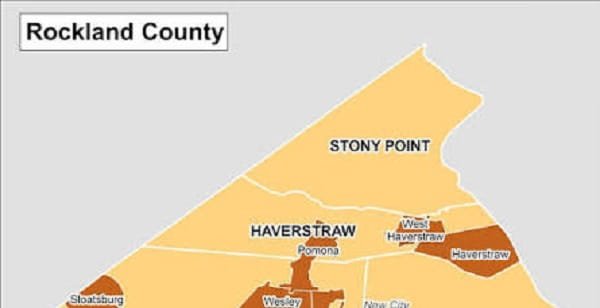
Quick Overview of Rockland County
| Category | Details |
| State | New York |
| Region | Lower Hudson Valley |
| County seat | New City |
| Established | February 23, 1798 |
| Estimated population | 357,397 in 2025 |
| Land area | Approximately 173 square miles |
| Municipal structure | Five towns and 18 incorporated villages |
| Incorporated cities | None |
| Governing body | 17-member County Legislature |
| County executive | Ed Day |
| Legislature chair | Jay Hood Jr. |
| Legislature vice chair | Aney Paul |
| Legislature second vice chair | Philip Soskin |
| Majority leader | Alden H. Wolfe |
| Minority leader | Lon M. Hofstein |
| County manager or administrator | None; administration is led by the elected county executive |
| Main trial courts | New York State Supreme Court and Rockland County Court |
| District administrative judge | Justice Anne E. Minihan |
| Rockland Supreme and County Court chief clerk | Thomas Morrissey |
| Sheriff | Louis Falco III |
| District attorney | Thomas E. Walsh II |
| County clerk | Donna G. Silberman |
| Major economic sectors | Healthcare, education, retail, professional services, construction, manufacturing and hospitality |
Rockland County’s estimated population reached 357,397 in July 2025, an increase of approximately 5.6% from the April 2020 population base. The county covers only about 173.44 square miles of land, giving it a population density of roughly 1,951 residents per square mile at the 2020 Census.
Location and Geographic Structure
Rockland County occupies the western side of the Hudson River, about 15 miles north of New York City at its closest point. Orange County lies to the north and northwest, while Bergen and Passaic counties in New Jersey border it to the south and southwest. Westchester and Putnam counties are located across the Hudson River.
The county contains several distinct geographic areas:
- Hudson River waterfront communities
- The Ramapo Mountains
- The Palisades ridge
- Suburban neighbourhoods
- Historic village centres
- Remaining agricultural land
- State and county parkland
- Commercial and industrial corridors
The Hudson River defines the eastern edge of the county. Nyack, Piermont, Haverstraw, Grand View-on-Hudson and Upper Nyack are among its best-known riverfront villages.
Major roads include the New York State Thruway, Interstate 87, Interstate 287, the Palisades Interstate Parkway, U.S. Routes 9W and 202, and New York State Routes 17, 45, 59, 303 and 304.
The Governor Mario M. Cuomo Bridge connects Rockland County with Westchester County. The county’s Department of Public Transportation works with state, municipal and regional agencies to coordinate buses, rail connections, ferries, roads, cycling facilities and commuter programmes.
Towns, Villages and Hamlets
Rockland County contains five towns:
- Clarkstown
- Haverstraw
- Orangetown
- Ramapo
- Stony Point
Its incorporated villages are:
- Airmont
- Chestnut Ridge
- Grand View-on-Hudson
- Haverstraw
- Hillburn
- Kaser
- Montebello
- New Hempstead
- New Square
- Nyack
- Piermont
- Pomona
- Sloatsburg
- Spring Valley
- Suffern
- Upper Nyack
- Wesley Hills
- West Haverstraw
South Nyack was formerly an incorporated village but was formally dissolved on March 31, 2022. It is now treated as a hamlet within the Town of Orangetown.
Other important hamlets include:
- Bardonia
- Blauvelt
- Congers
- Hillcrest
- Monsey
- Mount Ivy
- Nanuet
- New City
- Orangeburg
- Pearl River
- Sparkill
- Tappan
- Valley Cottage
- Viola
- West Nyack
Towns and villages maintain their own elected governments. They normally handle zoning, building permits, local streets, parks, property maintenance and certain police services. Rockland County concentrates on regional functions that cross municipal boundaries.
Residents should identify the correct town and village before applying for a permit or reporting a local problem. A postal address such as Nanuet, Monsey or New City does not represent a separate incorporated municipality.
Population and Housing
Rockland County has a young, culturally diverse and multilingual population. Census data indicates that approximately 30.3% of residents are under 18, while around 16% are aged 65 or older.
Approximately 21.8% of residents identify as Hispanic or Latino, 12.9% as Black or African American and 6.3% as Asian. About 22.1% of residents are foreign-born, while 44.2% of people aged five or older speak a language other than English at home.
Important housing and income figures for the 2020–2024 period include:
- Owner-occupied housing rate: 67.9%
- Median owner-occupied home value: $596,900
- Median gross monthly rent: $1,901
- Median monthly owner cost with a mortgage: $3,641
- Average household size: 3.22 people
- Median household income: $109,959
- Per-capita income: $45,570
- Residents below the poverty line: 15.2%
- Average journey to work: 29.7 minutes
- Adults with a bachelor’s degree or higher: 42.7%
Housing includes apartments, village homes, established suburban neighbourhoods, townhouses and larger properties near the county’s mountain and riverfront areas. Housing demand, limited developable land and high construction costs have made affordability a major concern.
The county’s planning work now includes housing, transportation, economic development, sustainability and future infrastructure needs through the Envision Rockland comprehensive planning process.
Economy and Employment
Rockland County has a service-based economy supported by healthcare, education, retail, professional services, construction, manufacturing, accommodation and food services.
The county recorded approximately 11,094 employer establishments and 128,380 jobs in 2023. Annual payroll exceeded $7.05 billion. Retail sales reached approximately $6.69 billion in 2022, while healthcare and social-assistance organisations generated about $3.81 billion in receipts or revenue.
Important economic and institutional assets include:
- Montefiore Nyack Hospital
- Good Samaritan Hospital
- Rockland Community College
- Palisades Center
- Pearl River business and research facilities
- Industrial areas in Orangeburg and West Nyack
- Downtown village business districts
- Hudson River tourism and recreation
- Interstate and regional transport connections
- Retail and professional-service centres
Education and healthcare form the county’s largest employment grouping. Retail is also significant, while professional services, construction, accommodation, manufacturing and warehousing support a broad range of local employment.
The Department of Economic Development and Tourism works to attract businesses, assist existing employers, promote filming and increase visitor activity. Rockland’s position near New York City, New Jersey, the Hudson River and four major airports supports its economic appeal.
County Administration and Government
Rockland County operates under a charter form of government with a separately elected county executive and a 17-member County Legislature.
The Legislature replaced the former Board of Supervisors in 1970. Each legislator represents a single geographic district. The Legislature adopts local laws, approves the budget, authorises contracts and reviews county policies.
The current legislators are:
- District 1: Douglas J. Jobson
- District 2: Paul C. Cleary
- District 3 and chair: Jay Hood Jr.
- District 4: Itamar Yeger
- District 5 and minority leader: Lon M. Hofstein
- District 6 and majority leader: Alden H. Wolfe
- District 7 and second vice chair: Philip Soskin
- District 8: Toney L. Earl
- District 9 and deputy minority leader: Raymond W. Sheridan III
- District 10: Beth J. Davidson
- District 11: Will J. Kennelly
- District 12: Jesse M. Malowitz
- District 13: Moshe Hopstein
- District 14 and vice chair: Aney Paul
- District 15: Joel Friedman
- District 16: Thomas F. Diviny
- District 17 and deputy majority leader: Dana G. Stilley
Jay Hood Jr. was elected to a fifth consecutive term as Legislature chair for 2026. Aney Paul was re-elected vice chair, Philip Soskin became second vice chair, Alden H. Wolfe remained majority leader and Lon M. Hofstein remained minority leader.
County Executive and Administrative Leadership
Ed Day serves as Rockland County Executive. He was first elected in 2013 and is serving his fourth term.
Rockland County does not use an appointed county-manager or county-administrator system. The county executive is the chief executive and administrative authority for departments operating within the executive branch.
The county executive’s principal responsibilities include:
- Preparing the proposed county budget
- Supervising executive departments
- Appointing department commissioners
- Implementing laws and legislative policies
- Approving or vetoing legislation
- Managing county programmes
- Coordinating emergency responses
- Preparing capital plans
- Representing the county before other governments
- Monitoring administrative and financial performance
The executive works with commissioners and directors responsible for finance, planning, social services, health, highways, public transportation, environmental resources, economic development and general services.
Other Important County Officials
Rockland County has several independently elected countywide officials:
- Sheriff: Louis Falco III
- District Attorney: Thomas E. Walsh II
- County Clerk: Donna G. Silberman
Sheriff Louis Falco III leads an office divided into Police, Civil, Corrections and Communications divisions. The Sheriff’s Office operates the county correctional facility, serves civil process, transports prisoners, supports emergency communications and maintains specialised police units.
District Attorney Thomas E. Walsh II is the county’s chief criminal prosecutor. His office prosecutes criminal cases, supports crime victims and works with municipal, county, state and federal law-enforcement agencies.
County Clerk Donna G. Silberman maintains court and land records and provides services involving passports, business certificates, notaries, pistol licences, immigration records and official document filing.
Judiciary and Court System
Rockland County is part of New York’s Ninth Judicial District. Justice Anne E. Minihan serves as district administrative judge for the Ninth Judicial District, which covers Rockland, Westchester, Dutchess, Orange and Putnam counties. Thomas Morrissey serves as chief clerk of Rockland Supreme and County Court.
The Supreme Court justices assigned to Rockland County are:
- Justice John P. Collins Jr.
- Justice Larry J. Schwartz
- Justice Rachel E. Tanguay
- Justice Thomas Zugibe
The Rockland County Court judges are:
- Judge David Ascher
- Judge Djinsad Desir
- Judge Kevin F. Russo
Judge Keith J. Cornell serves as Surrogate.
The New York State Supreme Court mainly handles major civil cases and matrimonial matters. Rockland County Court handles felony trials and selected civil and appellate proceedings.
Other courts include:
- Family Court
- Surrogate’s Court
- Town justice courts
- Village justice courts
Family Court handles custody, support, juvenile and family-offence cases. Surrogate’s Court manages estates, probate, guardianships and related matters. Town and village courts hear traffic cases, misdemeanours, local ordinance violations, evictions and smaller civil claims.
Most major judicial operations are located at the Rockland County Courthouse at 1 South Main Street in New City.
Public Safety and Emergency Services
Local police responsibility varies by municipality. Several towns and villages maintain police departments, while the Sheriff’s Office provides countywide support and specialised services.
County public-safety responsibilities include:
- Correctional operations
- Emergency communications
- Civil-process enforcement
- Prisoner transportation
- Crime-scene services
- Bomb and fire investigation
- Marine and mounted patrols
- Tactical response
- Computer-crime investigations
- Probation and community corrections
- Emergency management
- Fire-service coordination
Fire protection is largely provided by municipal and volunteer fire departments. The county assists with emergency communications, specialised training, hazardous-material planning and coordinated response.
Infrastructure, Transportation and Public Services
Rockland County manages highways, public transportation, environmental programmes, social services, health services, parks and regional planning.
Major county responsibilities include:
- County roads and bridges
- Transport of Rockland bus services
- TRIPS paratransit
- Public health
- Social services
- Sewer infrastructure
- Environmental protection
- Solid-waste planning
- Office for the Aging
- Veterans’ services
- Consumer protection
- Economic development
- Emergency services
- County parks
Transport of Rockland operates ten fixed bus routes, while TRIPS provides complementary paratransit services. The county also coordinates with rail, ferry, private bus and regional transportation providers.
The Rockland County park system contains 30 parks and open-space properties covering approximately 3,179 acres. These properties protect mountain ridges, trails, wildlife habitats, historic places and recreation areas.
Frequently Asked Questions
Q1. What is the county seat of Rockland County?
A: New City is the county seat. The main executive and legislative offices are located in the Allison-Parris County Office Building at 11 New Hempstead Road.
Q2. Is New City an incorporated city?
A: No. New City is an unincorporated hamlet in the Town of Clarkstown. Rockland County does not contain any incorporated cities.
Q3. Does Rockland County have a county manager?
A: No. The elected county executive leads the executive and administrative branch. Ed Day is the current county executive.
Q4. Which court handles major cases in Rockland County?
A: The New York State Supreme Court handles major civil and matrimonial cases. Rockland County Court mainly handles felony criminal cases. Other matters are assigned to Family, Surrogate’s, town or village courts.
Q5. Who provides building permits in Rockland County?
A: Building and zoning permits are normally administered by the town or incorporated village where the property is located. Residents should verify the correct municipality before applying.