 By Patricia Jones
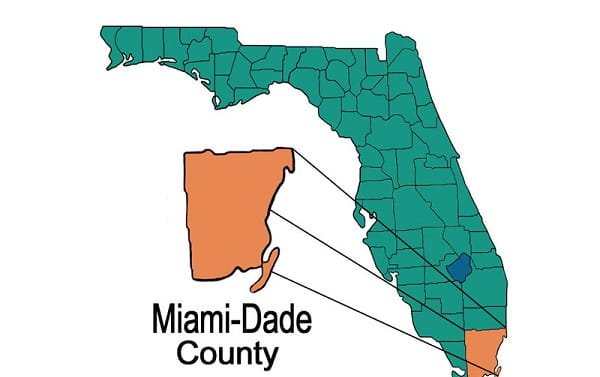
 Miami-Dade County is Florida’s most populous county and the principal government, business, transport and cultural centre of South Florida. It includes the City of Miami, major coastal and suburban municipalities, extensive unincorporated communities, agricultural districts and large protected areas bordering the Everglades.
Miami is the county seat and the main location for county administration, courts, finance, healthcare and regional institutions. Hialeah, Miami Gardens, Miami Beach, Homestead, Doral, Coral Gables and North Miami are among the county’s other important municipalities.
Miami-Dade operates under a home-rule charter with an elected strong mayor and a 13-member Board of County Commissioners. County government provides both regional services across municipal boundaries and municipal-style services in the large unincorporated area.
Quick Overview of Miami-Dade County
| Category | Details |
| State | Florida |
| Region | South Florida and the Miami metropolitan area |
| County seat | Miami |
| Created | January 18, 1836 |
| Renamed | Miami-Dade County on November 13, 1997 |
| Estimated population | 2,802,029 in 2025 |
| Land area | Approximately 1,900 square miles |
| Incorporated municipalities | 34 |
| Largest city | Miami |
| Government structure | Strong mayor and 13-member Board of County Commissioners |
| County mayor | Daniella Levine Cava |
| Board chairman | Anthony Rodriguez |
| Board vice chairman | Kionne L. McGhee |
| County manager | None |
| Chief judge | Ariana Fajardo Orshan |
| Trial court administrator | Deirdre Dunham |
| Clerk of the Court and Comptroller | Juan Fernandez-Barquin |
| Sheriff | Rosie Cordero-Stutz |
| Main airport | Miami International Airport |
| Seaport | PortMiami |
| Major economic sectors | International trade, aviation, tourism, finance, healthcare, logistics, construction and professional services |
Miami-Dade County had an estimated population of 2,802,029 in July 2025, an increase of approximately 3.7% from the April 2020 population base. It contained 1,125,274 housing units in 2025 and approximately 975,411 households during the 2020–2024 reporting period.
Location and Geographic Structure
Miami-Dade County occupies the southeastern tip of the Florida peninsula. Broward County lies to the north, Collier County is to the west, Monroe County is to the south and southwest, and the Atlantic Ocean forms the eastern boundary.
The county’s dense urban corridor runs mainly along the eastern mainland and Biscayne Bay. Central and western communities include large suburban areas, while South Dade contains Homestead, Florida City, farms, nurseries and lower-density settlements. Much of the far west is protected wetland within or adjoining Everglades National Park and other conservation lands.
Important geographic areas include:
- The City of Miami, Downtown and Brickell
- Miami Beach and the Atlantic barrier islands
- Northern municipalities including Aventura, Miami Gardens and North Miami
- Central communities around Doral, Hialeah, Westchester and Kendall
- South Dade, Homestead and Florida City
- Biscayne Bay, coastal wetlands and barrier islands
- The agricultural area west and south of the urban development boundary
- Everglades wetlands and water-conservation areas
Major regional roads include:
- Interstate 95
- Interstate 75
- Florida’s Turnpike
- S. Highway 1
- S. Highway 27
- State Road 826, the Palmetto Expressway
- State Road 836, the Dolphin Expressway
- State Road 874, the Don Shula Expressway
Miami International Airport, PortMiami, major expressways, rail lines and transit systems connect the county with the rest of Florida, Latin America, the Caribbean and global markets. Geography also creates continuing public-policy concerns involving coastal flooding, storm surge, sea-level rise, groundwater, hurricane evacuation and protection of the Everglades.
Cities and Unincorporated Communities
Miami-Dade County contains 34 incorporated municipalities:
- Aventura
- Bal Harbour
- Bay Harbor Islands
- Biscayne Park
- Coral Gables
- Cutler Bay
- Doral
- El Portal
- Florida City
- Golden Beach
- Hialeah
- Hialeah Gardens
- Homestead
- Indian Creek
- Key Biscayne
- Medley
- Miami
- Miami Beach
- Miami Gardens
- Miami Lakes
- Miami Shores
- Miami Springs
- North Bay Village
- North Miami
- North Miami Beach
- Opa-locka
- Palmetto Bay
- Pinecrest
- South Miami
- Sunny Isles Beach
- Surfside
- Sweetwater
- Virginia Gardens
- West Miami
Each municipality has its own charter, elected government and local administrative system. Municipalities normally control zoning, building permits, code enforcement, neighbourhood streets and many local police, parks and public works functions. Some contract with the county for fire rescue, law enforcement, waste collection or other services.
More than one million residents live outside municipal boundaries in unincorporated Miami-Dade County. Well-known unincorporated communities include Kendall, Westchester, Tamiami, Fontainebleau, The Hammocks, Country Club, Ives Estates, Goulds, Princeton, Naranja, Leisure City, West Perrine and Richmond West.
A Miami, Hialeah, Homestead or other city mailing address does not always prove that a property is inside that municipality. Residents and businesses should confirm the legal jurisdiction before requesting permits, reporting a code problem or identifying the correct police agency.
Population and Housing
Miami-Dade has a large, multilingual and internationally connected population. Approximately 19.2% of residents are under 18 and 18.3% are aged 65 or older. Hispanic or Latino residents account for about 70.6% of the population, while approximately 54.5% of residents are foreign-born. About 75.3% of people aged five or older speak a language other than English at home.
Important housing and income figures for 2020–2024 include:
- Owner-occupied housing rate: 52.2%
- Median owner-occupied home value: $463,000
- Median gross monthly rent: $1,829
- Median monthly owner cost with a mortgage: $2,451
- Average household size: 2.76 people
- Median household income: $71,753
- Per-capita income: $39,469
- Residents below the poverty line: 14.2%
- Average journey to work: 30.9 minutes
- Housing units in 2025: 1,125,274
Housing ranges from high-rise apartments and condominiums in Miami, Miami Beach, Aventura and Sunny Isles Beach to suburban neighbourhoods, townhouses, gated communities, rural residences and agricultural properties. Housing costs, insurance, flood risk, ageing buildings and the supply of affordable homes are major countywide concerns.
The county issued 16,535 building permits in 2025. Continued growth increases demand for water and sewer capacity, transit, schools, roads, drainage, public safety and resilient construction, particularly in fast-developing central and southern communities.
Economy and Employment
Miami-Dade has one of the largest and most internationally oriented local economies in the United States. Its employment base includes aviation, seaport activity, logistics, tourism, hospitality, finance, real estate, construction, healthcare, education, technology, media, retail and professional services.
The county recorded 98,394 employer establishments and 1,055,440 jobs in 2023. Annual payroll exceeded $71.5 billion. Retail sales reached approximately $67.05 billion in 2022, while transportation and warehousing organisations generated about $38.51 billion in receipts or revenue.
Important economic and institutional assets include:
- Miami International Airport and the county airport system
- PortMiami and related cruise, cargo and maritime businesses
- Downtown Miami and Brickell financial and professional districts
- Tourism and hospitality in Miami Beach and coastal communities
- The Health District, Jackson Health System and major medical centres
- Florida International University, the University of Miami and Miami Dade College
- Trade, warehousing and distribution centres in Doral and western Miami-Dade
- Construction, real estate and property services
- Technology, creative industries, sports and international media
- Agriculture, nurseries and food production in South Dade
Miami International Airport is owned by Miami-Dade County and serves as a major passenger and cargo gateway. The county aviation system also includes Miami-Opa Locka Executive Airport, Miami Executive Airport, Homestead General Aviation Airport and Dade-Collier Training and Transition Airport.
PortMiami is also a county operation and supports cruise tourism, container cargo, vehicle shipments, trade and maritime employment. Together, the airport and seaport reinforce Miami-Dade’s role as a commercial bridge between the United States, Latin America and the Caribbean.
County Administration and Government
Miami-Dade County is governed under a home-rule charter. The legislative branch is the 13-member Board of County Commissioners, with each commissioner elected from a geographic district. The Board elects a chairman and vice chairman from among its members.
The current commissioners are:
- District 1: Oliver G. Gilbert III
- District 2: Marleine Bastien
- District 3: Keon Hardemon
- District 4: Micky Steinberg
- District 5: Vicki L. Lopez
- District 6: Natalie Milian Orbis
- District 7: Raquel A. Regalado
- District 8: Danielle Cohen Higgins
- District 9 and vice chairman: Kionne L. McGhee
- District 10 and chairman: Anthony Rodriguez
- District 11: Roberto J. Gonzalez
- District 12: Juan Carlos “JC” Bermudez
- District 13: René Garcia
The Board adopts ordinances and resolutions, approves the county budget, sets policy, authorises contracts, establishes land-use rules and oversees regional programmes. It also serves as the governing body for unincorporated Miami-Dade County and may create special districts or countywide service policies.
Anthony Rodriguez presides over Board meetings and appoints commission committee leadership. Kionne L. McGhee performs the chairman’s duties when the chairman is absent and serves in commissionwide leadership roles.
County Mayor and Administrative Leadership
Daniella Levine Cava serves as Miami-Dade County Mayor. She was re-elected in August 2024 and heads the county’s executive branch. The mayor oversees day-to-day county operations, prepares the proposed budget, appoints department directors, implements Board policy and may veto commission actions subject to the charter’s override process.
Miami-Dade does not use a conventional county-manager system. The elected mayor is the chief executive and is responsible for the administration of county departments. Senior leadership includes Deputy Mayor Roy Coley, who has a broad operations and infrastructure portfolio, and Chief of Staff Christopher Hudtwalcker.
Major executive responsibilities include:
- Preparing and administering the county budget
- Supervising executive departments and department directors
- Operating transportation, water, sewer, parks and public facilities
- Managing airport, seaport and economic-development functions
- Delivering housing, social and community services
- Coordinating emergency management and disaster recovery
- Implementing Board legislation and countywide policies
- Managing capital projects, procurement and employee operations
The County Attorney’s Office is separate from the mayor’s executive staff and provides civil legal advice and representation to the Board, mayor, departments and county agencies. Geri Bonzon-Keenan serves as County Attorney.
Other Important County Officials
Since January 7, 2025, five constitutional offices have operated independently from the main Miami-Dade County government structure. These offices are directly accountable to voters and perform duties assigned by the Florida Constitution and state law.
Current constitutional officers include:
- Sheriff: Rosie Cordero-Stutz
- Supervisor of Elections: Alina Garcia
- Property Appraiser: Tomas Regalado
- Tax Collector: Dariel Fernandez
- Clerk of the Court and Comptroller: Juan Fernandez-Barquin
Sheriff Rosie Cordero-Stutz leads the Miami-Dade Sheriff’s Office, which assumed most functions of the former Miami-Dade Police Department. The office provides law enforcement in unincorporated communities, serves certain contract municipalities and performs countywide duties involving investigations, detention support, warrants, court services and specialised operations.
Alina Garcia administers voter registration and countywide elections. Tomas Regalado determines property values and administers qualifying exemptions. Dariel Fernandez manages property-tax collection, motor-vehicle services and other statutory functions. Juan Fernandez-Barquin maintains court and official records and also serves as county comptroller, recorder, auditor and custodian of county funds.
Judiciary and Court System
Miami-Dade County forms Florida’s Eleventh Judicial Circuit. It is the largest judicial circuit in Florida and one of the largest trial-court systems in the United States. Chief Judge Ariana Fajardo Orshan provides judicial administration, while Trial Court Administrator Deirdre Dunham manages the Administrative Office of the Courts.
The court system handles:
- Felony and misdemeanour criminal cases
- Major civil disputes and county civil matters
- Family, divorce, child-custody and support cases
- Probate, estate and guardianship proceedings
- Juvenile delinquency and dependency matters
- Domestic-violence and protection-order cases
- Traffic cases and civil traffic infractions
- Small claims and landlord-tenant disputes
- Mental-health and problem-solving court matters
- Appeals authorised under Florida law
Major court facilities include the Osvaldo N. Soto Miami-Dade Justice Center for civil and probate matters, the Richard E. Gerstein Justice Building for criminal cases, the Lawson E. Thomas Courthouse Center for family and domestic-violence matters, and the Miami-Dade Children’s Courthouse for juvenile cases. Branch courts operate in several parts of the county.
The circuit and county courts have 123 judges and dispose of approximately 800,000 cases each year, including civil traffic matters. Katherine Fernandez Rundle serves as State Attorney for the Eleventh Judicial Circuit, and Carlos J. Martinez serves as Public Defender.
The Clerk of the Court and Comptroller maintains court filings, issues marriage licences, records official documents, collects qualifying fines and fees and provides public access to case information. The judiciary, Clerk, State Attorney, Public Defender, Sheriff and county government are separate organisations that work together within the justice system.
Public Safety and Emergency Services
Police responsibility depends on location. The cities of Miami, Miami Beach, Hialeah, Coral Gables, Miami Gardens, Doral and many other municipalities operate their own police departments. The Miami-Dade Sheriff’s Office generally provides patrol and investigative services in unincorporated areas and in municipalities that contract for service.
Countywide and regional public-safety functions include:
- Sheriff patrol, investigations and specialised law enforcement
- Court security, warrants and civil-process service
- Corrections, detention and prisoner transport
- Fire suppression and emergency medical response
- Air rescue, ocean rescue and marine operations
- Hazardous-material and urban search-and-rescue response
- Emergency communications and disaster coordination
- Medical examiner and public-safety support services
Miami-Dade Fire Rescue operates 71 fire-rescue stations in unincorporated areas and serves 29 municipalities. Its specialised resources include air rescue, marine services, hazardous-material response, technical rescue, urban search and rescue and lifeguard services at county beaches.
Emergency Management coordinates preparation, response and recovery for hurricanes, storm surge, flooding, tornadoes, extreme heat, wildfires, hazardous-material incidents and other disasters. The county operates an Emergency Operations Center and maintains evacuation, shelter and public-warning programmes.
Infrastructure, Transport and Public Services
Miami-Dade County provides regional services that cross municipal boundaries and municipal services for unincorporated communities. Several large systems operate as county departments or public enterprises.
Major county responsibilities include:
- Miami International Airport and four general-aviation airports
- PortMiami and maritime facilities
- Metrobus, Metrorail, Metromover and specialised transit services
- County roads, bridges, traffic signals and rights-of-way
- Water supply, wastewater treatment and sewer infrastructure
- Solid-waste collection and disposal services
- Stormwater management, canals and flood-control functions
- Planning, zoning and building regulation in unincorporated areas
- Public housing and community-development programmes
- Libraries, parks, beaches, marinas and cultural facilities
- Public health, animal services and social services
- Corrections, emergency management and fire rescue
The Department of Transportation and Public Works operates Metrobus, Metrorail, Metromover, Metro Express, MetroConnect and Special Transportation Service. It also maintains county roads, bridges, causeways, traffic signals, lighting and the secondary canal system.
Water and Sewer operates one of the region’s largest utility systems, while Solid Waste Management handles collection in service areas and manages disposal infrastructure. Responsibility can vary by address because municipalities may provide or contract for local services.
Frequently Asked Questions
Q1. Is the City of Miami the same government as Miami-Dade County?
A: No. The City of Miami is one of 34 municipalities with its own elected government, police department, zoning and local services. Miami-Dade County is a separate regional government serving the whole county and unincorporated communities.
Q2. How do residents confirm a property’s municipality?
A: A postal city name may differ from the legal municipality. Residents should check county property or jurisdiction records before seeking permits or reporting a local problem, as the result identifies the responsible city or county office.
Q3. Who issues building permits in Miami-Dade County?
A: A municipality normally issues permits within its boundaries. Miami-Dade County handles building, zoning and development matters in unincorporated areas and also performs certain countywide environmental and fire-review functions.
Q4. Where are deeds and court records filed?
A: The Clerk of the Court and Comptroller maintains court and official records, including deeds and mortgages. The Property Appraiser maintains assessment information but does not replace the Clerk’s recording function.
Q5. Are MIA and PortMiami city facilities?
A: No. Both are Miami-Dade County operations. The Aviation Department manages Miami International Airport, while PortMiami is the county seaport. Despite their names, they are countywide public enterprises.