 By Patricia Jones
 Knox County is the principal population, education, healthcare and business centre of East Tennessee. It includes the City of Knoxville, the Town of Farragut, established suburban neighbourhoods, expanding commercial corridors, riverfront districts and large unincorporated communities.
Knoxville is the county seat and the main centre of county administration, courts, higher education, healthcare and employment. Farragut is the county’s only other incorporated municipality. Communities such as Powell, Karns, Halls Crossroads, Corryton, Mascot, Gibbs, Hardin Valley and Concord remain unincorporated.
The county is home to the University of Tennessee’s main campus and serves as the economic centre of a much larger metropolitan region. Continued population growth has increased demand for housing, schools, roads, emergency services, parks and utility infrastructure.
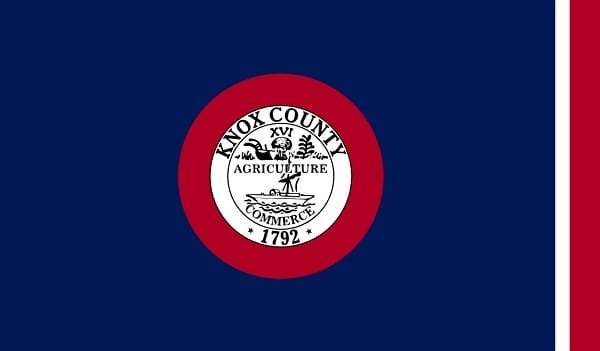
Quick Overview of Knox County
| Category | Details |
| State | Tennessee |
| Region | East Tennessee and Tennessee Valley |
| County seat | Knoxville |
| Established | 1792 |
| Estimated population | 511,453 in 2025 |
| Land area | Approximately 508.33 square miles |
| Incorporated municipalities | Knoxville and Farragut |
| Largest city | Knoxville |
| Government structure | Elected county mayor and 11-member County Commission |
| County mayor | Glenn Jacobs |
| County Commission chair | Gina Oster |
| County Commission vice-chair | Kim Frazier |
| County manager | None |
| Finance and budget director | Chris Caldwell |
| Judicial district | Sixth Judicial District |
| Sheriff | Tom Spangler |
| District attorney general | Charme P. Allen |
| Main passenger airport | McGhee Tyson Airport in neighbouring Blount County |
| County general-aviation airport | Downtown Island Airport |
| Major economic sectors | Healthcare, education, government, professional services, retail, manufacturing, tourism and technology |
Knox County’s estimated population reached 511,453 in July 2025, representing growth of approximately 6.8% from the April 2020 estimates base. The county contained 232,546 housing units in 2025 and approximately 201,146 households during the 2020–2024 reporting period.
Location and Geographic Structure
Knox County is located in East Tennessee within the Ridge-and-Valley section of the Appalachian region. Anderson and Union counties lie to the north, Grainger and Jefferson counties are to the northeast and east, Sevier and Blount counties are to the south, and Loudon and Roane counties are to the west.
Its landscape includes wooded ridges, broad valleys, suburban development, farmland and riverfront areas. The Holston and French Broad rivers meet near eastern Knoxville to form the Tennessee River, which flows through Knoxville and towards western Knox County.
Important geographic and community areas include:
- Downtown Knoxville and the University of Tennessee area
- North Knoxville and Fountain City
- West Knoxville and Bearden
- Farragut and Concord
- Hardin Valley
- Powell and Karns
- Halls Crossroads
- Gibbs and Corryton
- Mascot and eastern Knox County
- South Knoxville and riverfront communities
- Rural northern and eastern areas
Major highways include Interstates 40, 75, 275 and 640. Important surface routes include U.S. Highways 11, 25W, 70, 129 and 441, together with Tennessee State Routes 33, 62, 115, 131 and 162.
Interstate 40 provides east–west access towards Nashville, the Great Smoky Mountains and North Carolina. Interstate 75 connects the county with Chattanooga, Lexington and other major regional markets.
Municipalities and Unincorporated Communities
Knox County contains two incorporated municipalities:
- City of Knoxville
- Town of Farragut
Knoxville has its own mayor, City Council, police department, fire department, public works operations, planning services and municipal departments. It is separate from Knox County government even though many city and county offices share the City-County Building.
Farragut has its own elected Board of Mayor and Aldermen and manages municipal planning, zoning, parks, streets and community programmes. It does not operate the same full range of departments as Knoxville.
The county’s important unincorporated communities include:
- Ball Camp
- Carter
- Concord
- Corryton
- Gibbs
- Hardin Valley
- Halls Crossroads
- Karns
- Mascot
- Powell
- Solway
- Thorngrove
These areas may have recognised community names, schools, postal addresses and commercial centres but do not have independent municipal governments. Knox County therefore provides many of their planning, road, sheriff, code-enforcement and recreational services.
A Knoxville postal address does not necessarily mean that a property is inside Knoxville’s city limits. Residents should verify the jurisdiction before requesting permits, road repairs or police assistance. The University of Tennessee’s County Technical Assistance Service confirms that Knoxville and Farragut are Knox County’s two incorporated municipalities.
Population and Housing
Knox County has grown steadily because of employment, higher education, healthcare, recreation and its position as East Tennessee’s main metropolitan centre.
Approximately 20.7% of residents are under 18, while 16.7% are aged 65 or older. Around 8.7% identify as Black or African American, 6.8% as Hispanic or Latino and 2.8% as Asian. Approximately 6.5% of residents are foreign-born, and the county was home to more than 26,000 veterans during the 2020–2024 reporting period.
Important housing and income figures include:
- Owner-occupied housing rate: 65.2%
- Median owner-occupied home value: $320,900
- Median monthly owner cost with a mortgage: $1,589
- Median gross monthly rent: approximately $1,261
- Average household size: 2.39 people
- Median household income: $74,222
- Per-capita income: $43,351
- Residents below the poverty line: 12.8%
- Average journey to work: 22.2 minutes
The county issued 5,013 building permits in 2025. Housing ranges from downtown apartments and historic Knoxville neighbourhoods to suburban developments, student accommodation, townhouses and rural properties.
Growth is especially visible in Hardin Valley, Karns, Powell, Farragut and western Knox County. Increased development has created concerns involving affordability, traffic congestion, school capacity, stormwater management and the preservation of agricultural and open land.
Economy and Employment
Knox County has one of Tennessee’s largest and most diversified local economies. Healthcare, higher education, government, professional services, retail, manufacturing, finance, tourism and construction provide substantial employment.
The county recorded 12,519 employer establishments and 242,117 jobs in 2023. Annual payroll exceeded $13.62 billion. Retail sales reached approximately $13.94 billion in 2022, while healthcare and social-assistance organisations generated approximately $5.84 billion in receipts or revenue.
Important economic and institutional assets include:
- University of Tennessee, Knoxville
- University of Tennessee Medical Center
- Covenant Health
- Tennova Healthcare facilities
- Knox County Schools
- Tennessee Valley Authority operations
- Pilot Company
- Downtown Knoxville’s office and hospitality districts
- Interstate 40 and Interstate 75 commercial corridors
- Manufacturing and distribution facilities
- Technology and research-related companies
- Regional banking and professional-service firms
- Tourism and events connected with the university and surrounding mountain region
The University of Tennessee supports teaching, research, athletics, construction and related private businesses. Healthcare organisations serve patients from throughout East Tennessee, while Knoxville’s office, hospitality and retail sectors draw workers and customers from several surrounding counties.
The county also benefits from proximity to Oak Ridge’s federal research facilities and the Great Smoky Mountains, although those major assets are outside Knox County itself.
County Administration and Government
Knox County operates under a home-rule charter. Its government is divided between an elected county mayor, who leads the executive branch, and an 11-member County Commission, which performs legislative and budgetary functions.
The current County Commission members are:
- District 1: Damon Rawls
- District 2: Courtney Durrett
- District 3 and chair: Gina Oster
- District 4: Shane Jackson
- District 5: Angela Russell
- District 6: Terry Hill
- District 7: Rhonda Lee
- District 8: Adam Thompson
- District 9: Andy Fox
- At-Large Seat 10: Larsen Jay
- At-Large Seat 11 and vice-chair: Kim Frazier
Nine commissioners represent geographic districts, while two are elected from at-large seats. The Commission adopts ordinances and resolutions, approves budgets, authorises major contracts and considers zoning and development matters affecting unincorporated properties.
The Commission also funds public schools, the Sheriff’s Office, courts, public health, parks, engineering, libraries and other county programmes.
County Mayor and Administrative Leadership
Glenn Jacobs serves as Knox County mayor as of late July 2026. He was first elected in 2018 and re-elected in 2022. The county mayor is Knox County’s chief executive officer and directs departments within the executive branch.
Knox County does not employ a conventional county manager. Administrative authority is exercised by the elected mayor, departmental directors and independently elected constitutional officers.
The mayor’s principal responsibilities include:
- Preparing the proposed county budget
- Implementing Commission-approved policies
- Supervising executive departments
- Managing county property
- Executing contracts
- Coordinating capital projects
- Appointing department heads where authorised
- Working with schools, municipalities and regional agencies
- Presenting policy and financial recommendations to the Commission
Chris Caldwell serves as Knox County’s finance and budget director. His department manages accounting, budgeting, financial reporting, payroll and long-term fiscal planning.
Knox County’s approved 2026–2027 spending plan totals slightly more than $1.1 billion. Approximately $717.7 million is associated with the Knox County Schools general-purpose budget, making education the county’s largest financial commitment.
Other Important County Officials
Several independently elected officials exercise authority provided by Tennessee law and the county charter.
Current office-holders include:
- Sheriff: Tom Spangler
- District attorney general: Charme P. Allen
- County clerk: Sherry Witt
- Criminal Court clerk: Mike Hammond
- Circuit Court clerk: Charlie Susano
- Clerk and master: Scott Griswold
- Register of Deeds: Nick McBride
- Trustee: Justin Biggs
- Property assessor: Phil Ballard
- Law director: David Buuck
- Highway chief administrative officer: Jim Snowden
These names reflect the officials serving in late July 2026. Several county offices are subject to the August 2026 election and the subsequent September term transition.
Sheriff Tom Spangler leads the Sheriff’s Office, which provides patrol, investigations, detention, court security, civil-process and warrant services.
District Attorney General Charme P. Allen leads prosecution within Tennessee’s Sixth Judicial District. Her office prosecutes state felony and misdemeanour cases arising in Knox County and operates specialised units for matters such as domestic violence, child abuse, drugs and vehicular crimes.
Sherry Witt handles vehicle registration, business licences, marriage licences and other County Clerk services. Nick McBride records deeds, mortgages and related property documents, while Justin Biggs collects and distributes property-tax revenue.
Judiciary and Court System
Knox County forms Tennessee’s Sixth Judicial District. Its judicial system includes Circuit Court, Criminal Court, Chancery Court, General Sessions Court, Juvenile Court and specialised courts.
The current Criminal Court bench includes:
- Division I: Judge Emily F. Abbott
- Division II: Judge Hector Sanchez
- Division III: Judge G. Scott Green
Judge Abbott was appointed to Criminal Court in August 2025 after Judge Steven W. Sword moved to the Tennessee Court of Criminal Appeals.
Criminal Court handles felony cases and other serious criminal proceedings. Circuit Court generally handles major civil cases and certain family-law matters, while Chancery Court hears equity, property, estate, business and government-related disputes.
General Sessions Court handles:
- Misdemeanours
- Preliminary felony proceedings
- Traffic cases
- Lower-value civil claims
- Evictions
- County ordinance cases
- Warrants and initial hearings
Juvenile Court handles cases involving children, including delinquency, dependency, neglect and selected family matters.
Mike Hammond is the record-keeping clerk for Criminal Court, General Sessions Criminal Court and Fourth Circuit Court. Charlie Susano serves as Circuit Court clerk, while J. Scott Griswold is Clerk and Master for Chancery Court.
Most major county courts operate from the Knoxville City-County Building at 400 Main Street. The historic Old Knox County Courthouse at 300 Main Street houses several public-facing county services.
Public Safety and Emergency Services
Law-enforcement responsibility depends on location. The Knoxville Police Department serves properties within Knoxville’s city limits. The Knox County Sheriff’s Office generally serves unincorporated communities and performs countywide detention, court-security, warrant and civil-process functions.
The Town of Farragut does not maintain a large independent municipal police department and relies heavily on the Sheriff’s Office for law-enforcement coverage.
Fire protection is not delivered through one unified countywide fire department. Knoxville operates its own fire department, while protection outside the city is provided through other fire-service organisations and contractual arrangements. Residents should confirm the responsible fire provider for their address.
Other public-safety responsibilities include:
- Emergency medical response
- 911 communications
- Emergency management
- Detention operations
- Court security
- Rescue and hazardous-material coordination
- Disaster planning
- Public health emergency preparation
Severe thunderstorms, tornadoes, flooding, extreme heat, winter weather and hazardous-material incidents are among the risks addressed through county emergency planning.
Infrastructure, Transport and Public Services
Knox County maintains an extensive road and infrastructure system in unincorporated areas. The University of Tennessee’s County Technical Assistance Service reports approximately 1,976 county road miles and identifies Jim Snowden as the highway chief administrative officer.
Major county services include:
- Road and bridge maintenance
- Engineering and stormwater management
- Planning and development review
- Building codes and inspections
- Parks and recreation
- Public libraries
- Public health
- Solid-waste convenience centres
- Veterans’ services
- Community development
- Elections
- Property assessment and taxation
- Senior and disability programmes
Water, sewer, electricity and natural-gas services are supplied by Knoxville Utilities Board and several separate utility districts rather than by one countywide utility department.
Public transport within Knoxville is principally provided by Knoxville Area Transit. Regional and specialised transportation services are available through other agencies, but many unincorporated communities remain dependent on private vehicles.
The Metropolitan Knoxville Airport Authority operates both McGhee Tyson Airport and Downtown Island Airport. McGhee Tyson, the region’s main commercial airport, is approximately 12 miles south of downtown Knoxville in Blount County. Downtown Island Airport is a general-aviation facility within Knox County.
Frequently Asked Questions
Q1. What is the county seat of Knox County?
A: Knoxville is the county seat. The main county administrative offices and many courts are located in the City-County Building at 400 Main Street.
Q2. Are Knoxville and Knox County the same government?
A: No. Knoxville is an incorporated city with its own mayor, City Council, police department and municipal departments. Knox County is a separate government serving Knoxville, Farragut and unincorporated communities.
Q3. Does Knox County have a county manager?
A: No. Knox County has an elected county mayor who leads its executive branch. The mayor works with department directors, while the County Commission performs legislative and budgetary duties.
Q4. Who issues building permits in Knox County?
A: The responsible office depends on the property’s location. Knoxville, Farragut and unincorporated Knox County have different planning and permitting responsibilities. Property owners should verify the jurisdiction before applying.
Q5. Which court handles major criminal cases in Knox County?
A: Knox County Criminal Court handles felony cases and other serious criminal proceedings. General Sessions Court handles misdemeanours, traffic cases and preliminary proceedings in felony cases.