 By Patricia Jones
 Hidalgo County is a major population, trade, agricultural and administrative centre in the Rio Grande Valley of South Texas. It shares an international border with Mexico and includes several of the region’s largest cities, major commercial corridors, agricultural communities and extensive unincorporated areas.
Edinburg is the county seat and the main location for county administration and courts. McAllen is the county’s largest commercial and population centre. Other important cities include Mission, Pharr, Weslaco, San Juan, Mercedes, Donna, Alamo, Hidalgo and Edinburg.
Hidalgo County government operates separately from these city governments. It manages courts, criminal prosecution, detention, elections, property records, tax collection, roads, public health, emergency management and other countywide services for more than 921,000 residents.
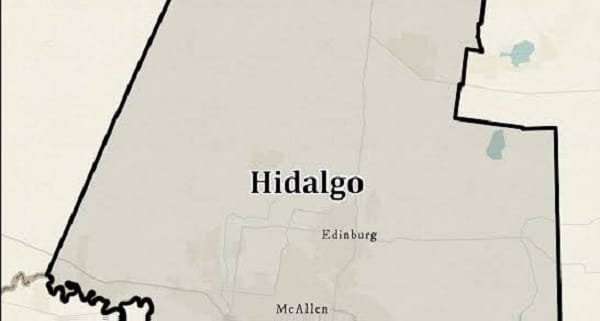
Quick Overview of Hidalgo County
| Category | Details |
| State | Texas |
| Region | Rio Grande Valley, South Texas |
| County seat | Edinburg |
| Established | 1852 |
| Estimated population | 921,549 in 2025 |
| Land area | Approximately 1,571 square miles |
| Incorporated municipalities | 22 |
| Governing body | Five-member Commissioners Court |
| County judge | Richard F. Cortez |
| Precinct 1 commissioner | David L. Fuentes |
| Precinct 2 commissioner | Eduardo “Eddie” Cantu |
| Precinct 3 commissioner | Everardo “Ever” Villarreal |
| Precinct 4 commissioner | Ellie Torres |
| County executive officer | Valde Guerra |
| Sheriff | J.E. “Eddie” Guerra |
| Hidalgo County, Texas | Toribio “Terry” Palacios |
| County clerk | Arturo Guajardo Jr. |
| District clerk | Laura Hinojosa |
| Tax assessor-collector | Pablo “Paul” Villarreal Jr. |
| County treasurer | Lita Leo |
| Local administrative district judge | Judge Rose G. Reyna |
| Main courthouse | Hidalgo County Courthouse, Edinburg |
| 2026 General Fund budget | Approximately $429.7 million |
| Major industries | International trade, healthcare, retail, agriculture, education and construction |
The county’s estimated population increased by approximately 5.8% between the April 2020 population base and July 2025. Hidalgo County had approximately 329,360 housing units in 2025 and more than 270,000 households during the 2020–2024 reporting period.
Location and Geographic Structure
Hidalgo County is located at the southern tip of Texas. The Rio Grande forms its southern boundary and separates it from the Mexican state of Tamaulipas.
The county borders:
- Starr County to the west
- Brooks County to the north
- Kenedy County to the northeast
- Willacy County to the east
- Cameron County to the southeast
- Mexico to the south
Its geography includes:
- Densely developed urban corridors
- International border communities
- Agricultural land
- Colonias and unincorporated settlements
- Irrigation and drainage systems
- Wildlife and conservation areas
- Industrial and logistics districts
- Large rural territories
- Flood-prone lowlands
Major road routes include:
- Interstate 2
- Interstate 69C
- S. Highway 83
- S. Highway 281
- State Highway 107
- State Highway 186
- State Highway 336
- State Highway 495
- Farm-to-market road networks
Interstate 2 connects major communities from Mission and McAllen through Pharr, San Juan, Alamo, Donna, Weslaco and Mercedes. Interstate 69C provides an important north-south connection through Pharr and Edinburg.
Cities and Unincorporated Communities
Hidalgo County contains 22 incorporated municipalities:
- Alamo
- Alton
- Donna
- Edcouch
- Edinburg
- Elsa
- Granjeno
- Hidalgo
- La Joya
- La Villa
- McAllen
- Mercedes
- Mission
- Palmhurst
- Palmview
- Peñitas
- Pharr
- Progreso
- Progreso Lakes
- San Juan
- Sullivan City
- Weslaco
1. Major Population and Employment Centres
Edinburg is the county seat and contains the courthouse, county administrative offices, the University of Texas Rio Grande Valley and major healthcare and government facilities.
McAllen is the county’s largest commercial centre. It contains major retail districts, hospitals, professional offices, international-business services and McAllen International Airport.
Pharr is an important trade, transport and logistics centre. Its location near international crossing facilities and major highways supports freight and warehousing activity.
Mission is a large residential, agricultural and commercial city in western Hidalgo County.
Weslaco serves as an important commercial, educational and healthcare centre in the eastern part of the county.
2. Unincorporated Areas
A substantial number of residents live outside city boundaries. These areas include rural communities, subdivisions, farming areas and colonias.
County government has a larger direct responsibility in unincorporated areas for:
- Road and bridge maintenance
- Subdivision regulation
- Drainage
- Sheriff’s Office patrol
- Environmental compliance
- Emergency planning
- Public-health services
- Selected parks and recreational facilities
Residents should confirm whether an address is inside a city, in a city’s extraterritorial jurisdiction or completely within unincorporated Hidalgo County before applying for development approval.
3. Population and Housing
Hidalgo County had an estimated population of 921,549 in 2025, compared with 870,781 residents recorded in the 2020 Census.
Important demographic figures include:
- Residents under 18: 28.5%
- Residents aged 65 or older: 12.9%
- Hispanic or Latino population: 92.1%
- Foreign-born residents: 26.1%
- Veterans: Approximately 19,400
- Residents speaking a language other than English at home: 80.1%
- Average household size: 3.27 people
Important housing figures include:
- Housing units in 2025: 329,360
- Owner-occupied housing rate: 67.5%
- Median owner-occupied home value: $140,900
- Median gross monthly rent: $957
- Residential building permits issued in 2025: 7,301
Housing costs remain lower than in many large Texas metropolitan areas. However, household income, insurance expenses, infrastructure availability and the condition of older homes affect actual affordability.
Some unincorporated settlements face challenges involving drainage, paved roads, wastewater systems, street lighting and access to emergency services. County, state and federal programmes may support infrastructure improvements in qualifying areas.
Education, Income and Workforce
Hidalgo County has a young workforce and a large bilingual population.
Approximately:
- 2% of residents aged 25 and older have completed high school.
- 6% hold a bachelor’s degree or higher.
- 59% of residents aged 16 and older participate in the civilian labour force.
- Median household income was $54,338 during 2020–2024.
- Per-capita income was approximately $23,117.
- About 26% of residents lived below the poverty line.
Important educational institutions include:
- University of Texas Rio Grande Valley
- South Texas College
- Texas State Technical College facilities
- Independent school districts throughout the county
- Medical and nursing training programmes
- Career and technical education centres
School districts and colleges are legally separate from Hidalgo County government. They have their own elected boards, budgets, taxing authority and administrative leadership.
Economy and Employment
Hidalgo County’s economy is strongly connected with the United States–Mexico border, regional healthcare, retail activity and population growth.
Major economic sectors include:
- International trade
- Logistics and warehousing
- Healthcare and social assistance
- Retail
- Education
- Construction
- Agriculture
- Food processing
- Government
- Professional services
- Tourism and hospitality
The county had approximately 13,393 employer establishments in 2023. Their combined annual payroll exceeded $8.4 billion.
International Trade
Hidalgo County’s location beside Mexico supports:
- Cross-border freight
- Customs brokerage
- Warehousing
- Truck transport
- Import and export businesses
- Retail activity
- Manufacturing supply chains
- Professional and financial services
International bridges are operated by different municipal or public authorities rather than by one single county department. Their activity affects roads, public safety, economic development and regional infrastructure throughout the county.
1. Healthcare
Healthcare is one of the county’s largest and fastest-growing sectors. Major cities contain hospitals, emergency centres, specialist clinics, medical schools and community-health facilities.
The University of Texas Rio Grande Valley School of Medicine has also expanded medical education, research and clinical training within the region.
2. Agriculture
Agriculture remains an important part of the county’s economy and identity.
Products include:
- Citrus fruits
- Vegetables
- Cotton
- Grain
- Sugarcane-related crops
- Livestock
- Nursery products
Water availability, irrigation costs, drought and conversion of farmland into residential development influence the future of the agricultural sector.
Commissioners Court
Hidalgo County is governed by a five-member Commissioners Court. It consists of the County Judge and four precinct commissioners.
The current members are:
- County Judge: Richard F. Cortez
- Precinct 1 Commissioner: David L. Fuentes
- Precinct 2 Commissioner: Eduardo “Eddie” Cantu
- Precinct 3 Commissioner: Everardo “Ever” Villarreal
- Precinct 4 Commissioner: Ellie Torres
Despite its name, Commissioners Court is primarily the county’s policy-making, budgeting and administrative body. It is not an ordinary trial court.
Its responsibilities include:
- Adopting the county budget
- Setting the property-tax rate
- Approving contracts
- Managing county property
- Funding courts and public safety
- Supporting roads and bridges
- Approving personnel policies
- Appointing department leaders
- Managing county debt
- Supporting health and community programmes
- Approving intergovernmental agreements
- Managing emergency and disaster policies
The County Judge presides over meetings and also has responsibilities involving emergency management and county administration.
County Executive Officer
Valde Guerra serves as Hidalgo County Executive Officer.
The position is appointed by Commissioners Court and provides professional management support to county departments under the Court’s direct control.
The County Executive Officer is responsible for:
- Coordinating county operations
- Implementing Commissioners Court policies
- Providing management direction
- Monitoring administrative efficiency
- Supporting the budget process
- Coordinating department performance
- Advising county leadership
- Improving management procedures
- Supporting services delivered to residents
Hidalgo County does not use the conventional single county-manager system found in some other states. Executive responsibility is shared among the County Judge, Commissioners Court, County Executive Officer and independently elected officials.
The County Executive Officer does not control independently elected offices such as the Sheriff, County Clerk, District Clerk or District Attorney.
County Budget
Hidalgo County’s adopted 2026 General Fund budget totals approximately $429.7 million.
Major spending categories include:
- General government
- Public safety
- Health and welfare
- Sanitation
- Culture and recreation
- Conservation
- Urban and economic development
- Road-related programmes
Public safety represents a major part of spending because the county supports courts, prosecution, detention, constables, juvenile services and other justice operations.
The adopted property-tax rate for 2026 is $0.5750 per $100 of taxable value. The budget process is coordinated by Commissioners Court, the Department of Budget and Management, the County Auditor and individual departments.
Other Important County Officials
Several county offices are independently elected.
1. Sheriff
J.E. “Eddie” Guerra serves as Hidalgo County Sheriff.
The Sheriff’s Office is responsible for:
- Patrol in unincorporated areas
- County jail operations
- Criminal investigations
- Court security
- Prisoner transportation
- Civil-process service
- Emergency response
- Specialised law-enforcement operations
Incorporated cities generally operate their own police departments. The Sheriff retains countywide responsibilities involving detention, courts and cooperation with local, state and federal agencies.
Criminal District Attorney
Toribio “Terry” Palacios serves as Criminal District Attorney.
The office:
- Prosecutes felony cases
- Prosecutes qualifying misdemeanours
- Supports crime victims
- Advises law-enforcement agencies
- Handles civil matters assigned by law
- Represents the state in criminal proceedings
County Clerk
Arturo Guajardo Jr. serves as County Clerk.
The office maintains:
- County court records
- Official public records
- Deeds and mortgages
- Marriage licences
- Commissioners Court records
- Birth and death records
- Other documents assigned by Texas law
District Clerk
Laura Hinojosa serves as District Clerk.
The District Clerk maintains records for the county’s district courts, including felony, family and major civil proceedings.
Tax Assessor-Collector
Pablo “Paul” Villarreal Jr. serves as Tax Assessor-Collector.
The office handles:
- Property-tax collection
- Motor-vehicle registration
- Vehicle titles
- Voter registration
- Tax statements
- Selected permits and fees
County Treasurer and Auditor
Lita Leo serves as County Treasurer and manages county funds, payroll-related responsibilities and financial receipts.
Letty Chavez serves as County Auditor. The Auditor provides financial oversight, accounting, expenditure review and reporting.
Judiciary and Court System
Hidalgo County has one of the largest county-level court systems in South Texas.
Its principal courts include:
- District courts
- County courts at law
- Statutory probate court
- Justice of the Peace courts
- Child-protection and master courts
District Courts
Hidalgo County has 13 district courts:
- 92nd District Court
- 93rd District Court
- 139th District Court
- 206th District Court
- 275th District Court
- 332nd District Court
- 370th District Court
- 389th District Court
- 398th District Court
- 430th District Court
- 449th District Court
- 464th District Court
- 476th District Court
Judge Rose G. Reyna of the 206th District Court serves as Local Administrative District Judge.
District courts handle:
- Felony criminal cases
- Major civil lawsuits
- Family-law cases
- Divorce and child custody
- Juvenile matters
- Property disputes
- Other cases assigned under Texas law
County Courts at Law
The county operates nine county courts at law and a separate statutory probate court.
County courts at law generally handle:
- Misdemeanours
- Civil claims within legal limits
- Family matters
- Appeals from Justice Courts
- Criminal traffic matters
- Other cases assigned by statute
The Probate Court handles:
- Wills and estates
- Guardianships
- Probate administration
- Mental-health proceedings
- Related civil matters
Justice of the Peace Courts
Hidalgo County has five Justice of the Peace precincts with nine court places.
These courts generally handle:
- Small claims
- Evictions
- Class C misdemeanours
- Traffic matters
- Warrants
- Preliminary criminal proceedings
- Debt claims within legal limits
The main court facility is the modern Hidalgo County Courthouse at 100 North Closner Boulevard in Edinburg. It began court operations in March 2025.
Public Safety and Emergency Management
Public-safety responsibilities are divided among:
- Sheriff’s Office
- Municipal police departments
- Constables
- Fire departments
- Emergency-service providers
- Emergency Management
- State and federal agencies
Hidalgo County has five elected constables serving the Justice of the Peace precincts. Constables perform civil-process service, warrant duties, court support and other law-enforcement responsibilities.
The County Judge’s Office of Emergency Management coordinates preparation and response for:
- Hurricanes
- Tropical storms
- Flooding
- Extreme heat
- Drought
- Wildfires
- Hazardous-material incidents
- Public-health emergencies
Flooding and drainage are especially important because parts of the county are low-lying and can receive intense rainfall during tropical weather.
Health and Community Services
Hidalgo County Health and Human Services provides or coordinates programmes involving:
- Public health
- Disease monitoring
- Vaccination
- Environmental health
- Emergency-health planning
- Indigent healthcare
- Community education
- Animal-related health concerns
- Maternal and family health
Other county-supported services include:
- Head Start
- Veterans services
- Community assistance
- Housing programmes
- Juvenile services
- Public libraries and cultural programmes
- Agricultural Extension
- Parks and recreation
A substantial number of residents lack health insurance, making county, state, nonprofit and hospital-based safety-net programmes particularly important.
Roads, Drainage and Development
Road and bridge responsibilities are divided among the four commissioner precincts and countywide departments.
Services may include:
- Road maintenance
- Pothole repair
- Traffic signs
- Culvert installation
- Ditch cleaning
- Drainage improvements
- Right-of-way work
- Removal of illegal dumping
- Precinct park maintenance
Cities maintain most streets inside their municipal boundaries, while the Texas Department of Transportation manages interstate and state highways.
The Planning Department regulates subdivisions and development in applicable unincorporated areas. Cities may also exercise development authority within their extraterritorial jurisdictions.
Frequently Asked Questions
Q1. Is Hidalgo County the same government as McAllen or Edinburg?
A: No. McAllen and Edinburg have their own mayors, councils, police departments and municipal services. Hidalgo County is a separate government responsible for courts, records, detention, taxation and unincorporated-area services.
Q2. Who manages Hidalgo County government?
A: The elected Commissioners Court establishes policy and approves the budget. Richard F. Cortez serves as County Judge, while Valde Guerra serves as the appointed County Executive Officer for departments controlled by the Court.
Q3. Which offices handle property records, taxes and court records?
A: The County Clerk records deeds and official documents. The Tax Assessor-Collector collects property taxes. The District Clerk maintains district-court records, while the County Clerk maintains county-court records.
Q4. Which agency provides police services in unincorporated Hidalgo County?
A: The Hidalgo County Sheriff’s Office is the main law-enforcement agency in unincorporated communities. Cities normally operate their own police departments, while constables perform additional precinct and court-related duties.
Q5. Which court handles a case in Hidalgo County?
A: District courts handle felonies, major civil cases and many family matters. County courts at law handle misdemeanours and selected civil or family cases. Justice Courts handle evictions, small claims, traffic matters and Class C misdemeanours.