 By Patricia Jones
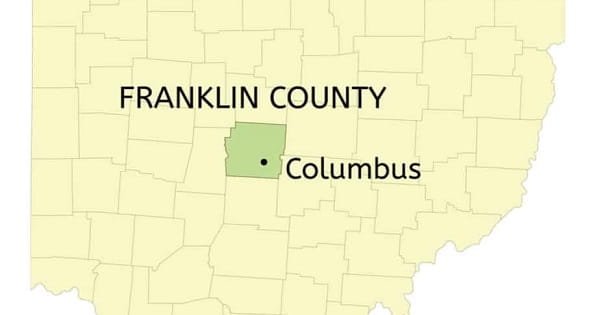
 Franklin County is the main administrative, economic and population centre of Central Ohio. It contains Columbus, the state capital and largest city in Ohio, along with major suburban cities, townships, villages, employment districts and unincorporated communities.
Columbus is the county seat and the primary location for county government, courts, healthcare systems and regional institutions. Other important communities include Dublin, Grove City, Hilliard, Gahanna, Reynoldsburg, Westerville, Upper Arlington, Whitehall, Worthington, Bexley and Grandview Heights.
Franklin County government operates separately from the City of Columbus and other municipalities. It manages courts, corrections, elections, property records, public health, social services, roads, drainage, emergency management and several countywide programmes serving more than 1.36 million residents.
Quick Overview of Franklin County
| Category | Details |
| State | Ohio |
| Region | Central Ohio |
| County seat | Columbus |
| Established | 1803 |
| Estimated population | 1,361,536 in 2025 |
| Land area | Approximately 532.42 square miles |
| Largest city | Columbus |
| Governing body | Three-member Board of County Commissioners |
| Board president | John O’Grady |
| County administrator | Kenneth N. Wilson |
| Main trial court | Franklin County Court of Common Pleas |
| General Division administrative judge | Judge Karen Held Phipps |
| General Division presiding judge | Judge Kim Brown |
| Main government complex | 373 South High Street, Columbus |
| Annual county budget process | Approximately $2.5 billion |
| Major economic sectors | Government, healthcare, education, finance, logistics, technology and professional services |
Franklin County’s population increased by approximately 2.9% between the April 2020 population base and July 2025. The county contained about 616,000 housing units in 2025 and more than 553,000 households during the 2020–2024 reporting period.
Location and Geographic Structure
Franklin County is located in the centre of Ohio. It is surrounded by Delaware County to the north, Licking and Fairfield counties to the east, Pickaway County to the south, Madison County to the west and Union County to the northwest.
The county includes:
- The City of Columbus
- Established inner-ring suburbs
- Fast-growing outer suburban communities
- Incorporated cities and villages
- Seventeen townships
- Unincorporated residential areas
- Commercial and industrial districts
- Agricultural land
- Rivers, creeks and floodplains
- Major interstate, railway and aviation connections
Important road corridors include:
- Interstate 70
- Interstate 71
- Interstate 270
- Interstate 670
- S. Highway 23
- S. Highway 33
- S. Highway 40
- State Route 315
- State Route 161
- State Route 104
Interstate 270 forms a beltway around much of metropolitan Columbus. Continued growth outside the beltway has increased demand for road improvements, housing, public utilities and emergency services.
Cities, Villages and Townships
Franklin County contains many incorporated municipalities. Some cities extend across county boundaries, including Dublin, Westerville, Reynoldsburg and New Albany.
Major municipalities
- Columbus: County seat, state capital and largest population centre
- Dublin: Corporate and residential centre in northwestern Franklin County
- Gahanna: Residential and commercial city near John Glenn Columbus International Airport
- Grove City: Fast-growing city in southwestern Franklin County
- Hilliard: Major suburban community west of Columbus
- Reynoldsburg: Eastern suburban city extending into more than one county
- Upper Arlington: Established residential city northwest of central Columbus
- Westerville: Northern city extending into Franklin and Delaware counties
- Whitehall: Inner-ring city east of Columbus
- Worthington: Historic northern suburb
- Bexley: Residential city east of downtown Columbus
- Grandview Heights: Compact city west of downtown
The county also contains villages and township communities. Municipalities generally provide their own police, fire, planning, zoning, local roads and recreation services.
County government has a larger direct role in unincorporated township areas. However, some townships operate their own police, fire, road and zoning departments.
Population and Housing
Franklin County is one of Ohio’s largest and most diverse population centres.
Important demographic figures include:
- Residents under 18: 22.5%
- Residents aged 65 or older: 14.5%
- Black population: 25.1%
- Asian population: 6.2%
- Hispanic or Latino population: 8.9%
- Foreign-born residents: 13%
- Veterans: More than 52,000
- Residents speaking another language at home: 16.7%
- Average household size: 2.36 people
Housing figures for the 2020–2024 period include:
- Owner-occupied housing rate: 52.8%
- Median owner-occupied home value: $288,400
- Median gross monthly rent: $1,302
- Housing units in 2025: 616,365
- Residential building permits in 2025: 10,494
Housing conditions vary considerably. Central Columbus contains apartments, historic neighbourhoods and new mixed-use development. Suburban communities have a larger concentration of detached homes, while township areas include both established neighbourhoods and new subdivisions.
Population growth has increased concerns involving housing affordability, homelessness, road capacity and access to public services.
Education, Income and Workforce
Franklin County has a large workforce connected with government, healthcare, higher education, finance, technology and logistics.
Approximately:
- 2% of residents aged 25 and older have completed high school.
- 1% hold a bachelor’s degree or higher.
- 4% of residents aged 16 and older participate in the civilian labour force.
- Median household income was $75,176 during 2020–2024.
- Per-capita income was approximately $43,731.
- About 13.9% of residents lived below the poverty line.
Major educational institutions include:
- The Ohio State University
- Columbus State Community College
- Capital University
- Franklin University
- Ohio Dominican University
- Columbus College of Art and Design
- Otterbein University in nearby Westerville
- Public school districts serving individual communities
School districts are separate public bodies with their own elected boards, budgets and taxing authority. They are not controlled by the Board of County Commissioners.
Economy and Employment
Franklin County has a broad economy supported by public institutions, private employers, small businesses and regional transport connections.
Major economic sectors include:
- State and local government
- Healthcare and social assistance
- Higher education and research
- Banking and financial services
- Insurance
- Technology
- Logistics and distribution
- Retail
- Construction
- Manufacturing
- Professional and technical services
- Hospitality
The county had approximately 30,700 employer establishments and more than 695,000 jobs in 2023. Total annual payroll exceeded $44 billion.
Major employment centres include:
- Downtown Columbus
- The Ohio State University and medical district
- Easton
- Polaris
- Dublin
- New Albany
- Rickenbacker-area logistics facilities
- Airport and industrial corridors
- Healthcare campuses
- State government offices
John Glenn Columbus International Airport and Rickenbacker International Airport support passenger travel, freight and logistics. The county’s central location also gives businesses access to major interstate routes and a large share of the United States population within a one-day drive.
County Administration and Government
Franklin County is governed by a three-member Board of County Commissioners. Commissioners are elected countywide to four-year terms.
The current Board consists of:
- President: John O’Grady
- Commissioner: Kevin L. Boyce
- Commissioner: Erica C. Crawley
The Board of Commissioners is the county’s main policy-making, budgeting and administrative authority.
Its responsibilities include:
- Adopting the county budget
- Approving appropriations
- Managing county property
- Approving contracts
- Supporting courts and corrections
- Funding health and human services
- Overseeing appointed county departments
- Managing economic-development programmes
- Supporting affordable-housing projects
- Coordinating emergency services
- Approving certain annexation and zoning matters
- Appointing members to boards and commissions
The commissioners oversee an annual budget of more than $2 billion. The 2026 budget includes major investments in justice, public safety, health, human services, housing and county facilities.
County Administrator
Kenneth N. Wilson serves as Franklin County Administrator. He was appointed in January 2015 and holds the highest unelected administrative position in county government.
The County Administrator leads the daily operation of departments under the Board of Commissioners and coordinates the county’s wider budgeting process.
His responsibilities include:
- Implementing Board policies
- Coordinating appointed departments
- Preparing and monitoring the budget
- Managing long-term financial planning
- Supervising administrative leadership
- Supporting economic development
- Reviewing major contracts
- Coordinating county facilities
- Managing organisational priorities
- Advising commissioners
- Supporting emergency response and continuity planning
The county administration team also includes three deputy county administrators. They oversee areas such as human services, public facilities, purchasing, sanitary engineering, community development and internal operations.
The administrator leads 14 county agencies with more than 1,400 employees and oversees a budget process covering approximately 35 agencies.
Other Important County Officials
Several countywide offices are led by independently elected officials. These officers receive their authority from Ohio law and the voters rather than from the County Administrator.
Important officeholders include:
- Auditor: Michael Stinziano
- Prosecuting Attorney: Shayla D. Favor
- Sheriff: Dallas Baldwin
- Clerk of Courts: Maryellen O’Shaughnessy
- Recorder: Daniel J. O’Connor Jr.
- Treasurer: Cheryl Brooks Sullivan
- Engineer: Adam W. Fowler
- Coroner:Nathaniel R. Overmire
Their responsibilities include:
- Property assessment
- County accounting
- Criminal prosecution
- Legal advice to county government
- Jail and courthouse operations
- Court records
- Motor-vehicle titles
- Real-estate records
- Property-tax collection
- County investments
- Roads and bridges
- Death investigations
These offices operate independently in many legal and administrative matters. The Board of Commissioners approves their budgets but generally cannot direct how elected officials perform duties assigned by state law.
Judiciary and Court System
Franklin County has a multi-level judicial system handling criminal, civil, family, probate, juvenile and lower-level cases.
The main courts include:
- Franklin County Court of Common Pleas, General Division
- Domestic Relations and Juvenile Division
- Probate Division
- Franklin County Municipal Court
- Tenth District Court of Appeals
1. Court of Common Pleas General Division
The General Division handles:
- Felony criminal cases
- Major civil lawsuits
- Property disputes
- Contract claims
- Appeals from certain administrative agencies
- Criminal sentencing
- Specialty and treatment dockets
Current leadership includes:
- Administrative Judge: Karen Held Phipps
- Presiding Judge: Kim Brown
The Administrative Judge manages court operations and judicial assignments. The Presiding Judge performs duties established by court rules and Ohio law.
2. Domestic Relations and Juvenile Division
This division handles:
- Divorce
- Child custody
- Child support
- Domestic-violence matters
- Juvenile delinquency
- Child abuse and neglect
- Juvenile dependency
- Children in need of court supervision
Judge Monica Hawkins serves as Administrative Judge of the Domestic Relations and Juvenile Division.
3. Probate Division
The Probate Court handles:
- Wills
- Estates
- Guardianships
- Trust matters
- Name changes
- Marriage licences
- Adoption proceedings
- Certain mental-health matters
Judge Jeffrey D. Mackey serves as Franklin County Probate Judge.
4. Municipal Court
Franklin County Municipal Court generally handles:
- Misdemeanour criminal cases
- Traffic offences
- Evictions
- Smaller civil claims
- Preliminary hearings in felony cases
- City and county ordinance violations
The Municipal Court has jurisdiction across Franklin County, although some municipalities operate mayor’s courts for limited local matters.
5. Tenth District Court of Appeals
The Tenth District Court of Appeals reviews decisions from Franklin County trial courts and appeals involving many Ohio state administrative agencies.
Anyone attending court should confirm:
- The correct court
- The case number
- The assigned judge
- The building address
- The courtroom
- The hearing date and time
- Security and filing requirements
Public Safety and Corrections
Public-safety responsibilities are divided among county, city and township agencies.
The Franklin County Sheriff’s Office performs duties including:
- County jail and correctional operations
- Courthouse security
- Civil-process service
- Warrant enforcement
- Criminal investigations
- Prisoner transport
- Specialised law-enforcement support
- Emergency response
- Selected patrol responsibilities
Columbus and most incorporated municipalities operate their own police departments. Some townships also have police departments, while others depend on the Sheriff’s Office or contracted services.
The county’s wider justice and public-safety system includes:
- Prosecuting Attorney
- Public Defender
- Community Based Correctional Facility
- Adult probation
- Juvenile justice
- Emergency Management and Homeland Security
- Coroner
- 911 and communications programmes
- Victim services
- Specialty courts
Justice, public safety, reserves and debt account for a large share of the county’s General Fund spending.
Health and Human Services
Franklin County operates or supports a large network of health and social-service agencies.
These include:
- Franklin County Public Health
- Job and Family Services
- Office on Aging
- Child Support Enforcement Agency
- Franklin County Children Services
- Board of Developmental Disabilities
- Alcohol, Drug and Mental Health Board
- Veterans Service Commission
- Community partnerships
- Housing and homelessness programmes
Services include:
- Food and financial assistance
- Medicaid eligibility support
- Employment programmes
- Child protection
- Adult Protective Services
- Senior assistance
- Disability services
- Mental-health and addiction services
- Disease monitoring
- Vaccination
- Environmental health
- Veterans assistance
Franklin County works with the City of Columbus, nonprofit organisations, healthcare providers and state agencies because many health and social problems cross jurisdictional boundaries.
Roads, Utilities and Infrastructure
The Franklin County Engineer’s Office designs, constructs and maintains county roads, bridges and drainage infrastructure.
Its responsibilities include:
- Road maintenance
- Bridge inspection and repair
- Traffic engineering
- Surveying
- Construction management
- Drainage improvements
- Snow and ice removal
- Safety planning
- Coordination with cities and townships
The Engineer’s Office has approximately 181 permanent employees and operates from several locations.
The Department of Sanitary Engineering provides water and sewer services in selected unincorporated and suburban areas. Other municipalities and regional authorities operate their own utility systems.
Economic Development and Planning manages responsibilities involving:
- Zoning in applicable unincorporated areas
- Building permits
- Community development
- Floodplain review
- Economic-development grants
- Annexation review
- Housing initiatives
- Long-range planning
Transportation and Regional Agencies
Transportation in Franklin County is managed by several separate public bodies.
Major agencies and systems include:
- Central Ohio Transit Authority
- Mid-Ohio Regional Planning Commission
- Ohio Department of Transportation
- Municipal street departments
- Franklin County Engineer
- Regional airport authorities
- Bicycle and pedestrian networks
COTA operates bus and mobility services in Columbus and participating communities. It is a regional authority rather than an ordinary county department.
The Solid Waste Authority of Central Ohio manages regional waste-disposal and recycling responsibilities. Parks, libraries, schools and airports may also be operated by separate public bodies rather than directly by Franklin County government.
Frequently Asked Questions
Q1. Is Franklin County the same government as the City of Columbus?
A: No. Columbus has its own mayor, city council, police, fire and municipal departments. Franklin County is a separate government responsible for courts, corrections, countywide records, social services and services in unincorporated areas.
Q2. What is the difference between the county commissioners and the County Administrator?
A: The commissioners are elected officials who approve policies, budgets and major contracts. The County Administrator is an appointed professional who implements those decisions and manages departments reporting to the Board.
Q3. Which court handles a case in Franklin County?
A: The correct court depends on the matter. Common Pleas General Division handles felonies and major civil cases. Domestic Relations and Juvenile Court handles family and juvenile matters. Probate Court handles estates and guardianships, while Municipal Court handles misdemeanours, traffic cases, evictions and smaller civil claims.
Q4. Which offices handle property records and property taxes?
A: The Auditor determines property values. The Recorder maintains deeds, mortgages and other real-estate documents. The Treasurer issues and collects property-tax payments. These offices perform separate parts of the property system.
Q5. Which agency provides police services outside Columbus?
A: Incorporated cities generally operate their own police departments, and some townships also provide police services. The Franklin County Sheriff has countywide authority and provides correctional, courthouse, civil-process and specialised law-enforcement services.