 By Patricia Jones
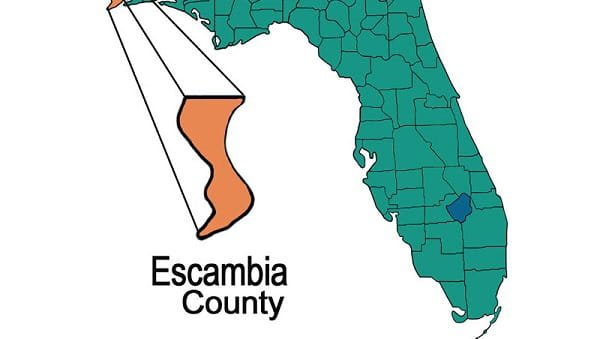
 Escambia County is the westernmost county in Florida and one of the oldest counties in the state. Pensacola is the county seat and the centre of government, courts, healthcare, higher education, military activity and regional business. The county combines a historic Gulf Coast city, suburban neighbourhoods, rural communities, military installations, rivers, bays and barrier-island beaches.
This article covers Escambia County in Florida, not the county of the same name in Alabama. Florida’s Escambia County includes the City of Pensacola, the Town of Century and large unincorporated areas such as Cantonment, Ensley, Ferry Pass, Warrington, Molino and Perdido Key.
The local economy has long been influenced by the military, maritime trade and public services. Today, healthcare, education, financial services, aviation, aerospace, manufacturing, tourism, construction, retail and technology also play major roles. Growth and development are strongest around Pensacola, Beulah, Nine Mile Road, Cantonment and the Interstate 10 corridor.
Quick Overview of Escambia County
| Category | Details |
| State | Florida |
| Region | Western Florida Panhandle / Gulf Coast |
| County seat | Pensacola |
| Established | July 21, 1821 |
| Estimated population | 333,834 in 2025 |
| Land area | Approximately 656.99 square miles |
| Incorporated municipalities | City of Pensacola and Town of Century |
| Governing body | Five-member Board of County Commissioners |
| Board chair | Ashlee Hofberger |
| Board vice chair | Steve Stroberger |
| County administrator | Wes Moreno |
| County attorney | Alison Rogers |
| Main trial court system | Florida First Judicial Circuit |
| Chief judge | Judge John Simon |
| Escambia administrative judge | Judge Jennie Kinsey |
| Trial court administrator | Kasey Watson |
| Clerk and comptroller | Pam Childers |
| Sheriff | Chip Simmons |
| Property appraiser | Gary “Bubba” Peters |
| Tax collector | Scott Lunsford |
| Supervisor of elections | Robert D. Bender |
| Major economic sectors | Military, healthcare, education, financial services, tourism, aviation, manufacturing and public services |
The U.S. Census Bureau estimated Escambia County’s population at 333,834 in July 2025. That was 3.7% higher than the April 2020 estimates base. The county had an estimated 153,340 housing units in 2025 and a 2020 population density of about 490 people per square mile.
Location and Geographic Structure
Escambia County occupies the extreme western end of the Florida Panhandle. Alabama lies to the north and west, Santa Rosa County lies to the east, and the Gulf of Mexico forms the southern boundary. The county’s position gives it close economic and transport connections with both northwest Florida and coastal Alabama.
The county covers about 656.99 square miles of land. Its geography can be divided broadly into four zones:
- The urban and suburban Pensacola area in the south-central part of the county
- Northern rural communities, farms and forests around Molino, McDavid, Walnut Hill and Century
- Waterfront and bay communities around Pensacola Bay, Escambia Bay, Bayou Chico, Bayou Texar and Perdido Bay
- Barrier-island and coastal areas, including Pensacola Beach on Santa Rosa Island and Perdido Key
Major natural features include:
- Escambia River and Escambia Bay
- Perdido River and Perdido Bay
- Pensacola Bay and Santa Rosa Sound
- Big Lagoon and Bayou Grande
- Santa Rosa Island
- Perdido Key
- Gulf Islands National Seashore
- Wetlands, pine forests, estuaries and coastal dune systems
The Escambia and Perdido river systems influence drainage, wildlife habitat and flood risk. Coastal parts of the county are exposed to storm surge, while inland communities may experience river flooding, flash flooding, tornadoes and damage from tropical systems.
Cities, Towns and Communities
Escambia County has only two incorporated municipalities:
- Pensacola – the county seat, largest municipality and principal centre for government, courts, employment, healthcare and culture
- Century – a small town near the Alabama state line in northern Escambia County
Most county residents live in unincorporated communities. Important population centres and neighbourhoods include:
- Bellview
- Beulah
- Brent
- Cantonment
- Ensley
- Ferry Pass
- Gonzalez
- Goulding
- Molino
- Myrtle Grove
- Pensacola Beach
- Perdido Key
- Warrington
- West Pensacola
Other northern and rural communities include McDavid, Walnut Hill, Bratt, Barrineau Park and Byrneville. Community names do not always correspond to incorporated boundaries, and many mailing addresses use “Pensacola” even when a property is outside the City of Pensacola.
This distinction matters for taxes, police jurisdiction, fire and rescue services, planning, building permits, code enforcement and elected representation. The City of Pensacola manages municipal services inside city limits, while Escambia County handles many services in unincorporated areas.
Population and Housing
Escambia County’s population is concentrated around Pensacola and the suburban corridor extending north and west from the city. Growth has also occurred near Beulah, Pine Forest Road, Nine Mile Road, Cantonment and the Interstate 10 interchanges. Northern Escambia County remains more rural and less densely developed.
Selected population and housing indicators include:
- 2025 estimated population: 333,834
- 2025 estimated housing units: 153,340
- Owner-occupied housing rate: 64.8%
- Median owner-occupied home value: $257,200
- Median gross monthly rent: $1,321
- Median monthly owner cost with a mortgage: $1,654
- Average household size: 2.38 people
- Residents aged 65 or older: 20.3%
- Veterans: approximately 33,582
The county has a large veteran and military-connected population because of Naval Air Station Pensacola and other defence facilities. Housing ranges from historic homes in Pensacola to suburban subdivisions, apartments, military housing, rural properties, waterfront homes and holiday accommodation on Pensacola Beach and Perdido Key.
The Census Bureau reported a median household income of $67,500 for 2020-2024 and per-capita income of $36,825. Approximately 14.5% of residents were below the poverty line. These figures show a county with major employment centres and valuable coastal property, but also neighbourhoods facing affordability, transport and redevelopment challenges.
Economy and Employment
Escambia County is the core of the Pensacola regional economy. The county recorded 7,650 employer establishments and 120,709 jobs in 2023, with annual payroll of about $6.66 billion. Retail sales reached approximately $6.8 billion in 2022, while healthcare and social-assistance organisations generated about $3.82 billion in receipts or revenue.
Major economic sectors include:
- Military and defence
- Healthcare and social assistance
- Higher education and public education
- Financial and professional services
- Aviation and aerospace
- Marine industries and port-related activity
- Manufacturing
- Construction and real estate
- Tourism, hospitality and recreation
- Retail and local services
- Government and public administration
- Cybersecurity and information technology
Naval Air Station Pensacola is one of the county’s defining institutions. It supports military training, aviation activity, civilian employment and a wide network of contractors and service businesses. Corry Station and Saufley Field add to the area’s defence and training presence.
Healthcare is another major source of employment. Large hospital systems, clinics, medical practices, rehabilitation centres and senior-care providers serve residents across northwest Florida and parts of southern Alabama. The University of West Florida and Pensacola State College support education, research, workforce training and local spending.
The county is also promoting aviation, marine, aerospace and technology industries. Pensacola International Airport, the Port of Pensacola, industrial parks, interstate access and the regional military workforce support business recruitment. Tourism remains important because of Pensacola Beach, Perdido Key, historic Pensacola, museums, festivals and sporting events.
County Administration and Government
Escambia County operates as a non-charter county government under Florida law. The legislative and policy-making authority is the five-member Board of County Commissioners. Each commissioner represents a geographic district and is elected to a four-year term.
The current commissioners are:
- District 1 and vice chair: Steve Stroberger
- District 2: Mike Kohler
- District 3: Lumon May
- District 4 and chair: Ashlee Hofberger
- District 5: Steven Barry
The Board of County Commissioners is responsible for:
- Adopting the annual operating and capital budget
- Setting county property-tax rates and other authorised assessments
- Approving ordinances, resolutions and contracts
- Making land-use and zoning decisions in unincorporated areas
- Funding county departments and capital projects
- Appointing the county administrator and county attorney
- Establishing policies for public safety, infrastructure and community services
- Serving on regional authorities and appointing members to county boards and committees
Escambia County adopted its 2025-2026 budget and was considering a proposed 2026-2027 budget during the 2026 budget cycle. County budgets support public safety, corrections, roads, drainage, parks, libraries, emergency services, planning, waste services and constitutional offices.
County Administrator and Administrative Leadership
Wes Moreno serves as Escambia County administrator. The Board of County Commissioners appoints the administrator, who acts as the county’s chief administrative officer and manages day-to-day operations under policies established by the Board.
The county administrator’s main responsibilities include:
- Implementing Board policies and decisions
- Managing the county’s appointed departments
- Preparing and recommending the annual budget
- Coordinating commission agendas, meetings and workshops
- Supervising major capital and service programmes
- Monitoring departmental performance and staffing
- Coordinating with municipalities, state agencies, federal agencies and community organisations
Escambia County currently lists 18 departments under the county administrator. Important administrative areas include public safety, fire rescue, emergency medical services, corrections, public works, natural resources, development services, neighbourhood and human services, parks and recreation, libraries, animal welfare and waste services.
Alison Rogers serves as county attorney. Her office represents the Board and county administration in civil legal matters, reviews contracts and ordinances, handles litigation and provides legal opinions to county officials and advisory bodies.
Other Important County Officials
Florida’s constitution creates several independently elected county offices. These officials have their own legal duties and are not ordinary departments controlled by the county administrator.
Current countywide officials include:
- Clerk of the Circuit Court and Comptroller: Pam Childers
- Sheriff: Chip Simmons
- Property Appraiser: Gary “Bubba” Peters
- Tax Collector: Scott Lunsford
- Supervisor of Elections: Robert D. Bender
Pam Childers serves as clerk of the courts, custodian of official records, clerk to the Board of County Commissioners and county comptroller. The office maintains court records, official documents, financial records and meeting records while carrying out auditing and public-trust responsibilities.
Sheriff Chip Simmons leads the Escambia County Sheriff’s Office, which provides patrol, criminal investigation, civil process, court security and specialised law-enforcement services. The Sheriff’s Office is the primary law-enforcement agency for unincorporated Escambia County. The City of Pensacola operates its own police department.
Property Appraiser Gary “Bubba” Peters determines the value and classification of property for taxation. Tax Collector Scott Lunsford collects property taxes and provides services such as vehicle registration and driver-licence transactions. Supervisor of Elections Robert D. Bender manages voter registration, election preparation, voting equipment, early voting and election reporting.
Judiciary and Court System
Escambia County is part of Florida’s First Judicial Circuit, which also serves Okaloosa, Santa Rosa and Walton counties. The main courthouse is the M.C. Blanchard Judicial Building at 190 West Government Street in downtown Pensacola. Juvenile-related operations are also conducted at the Theodore Bruno Juvenile Justice Center.
Current senior judicial and administrative leadership includes:
- Chief judge of the First Judicial Circuit: Judge John Simon
- Escambia County administrative judge: Judge Jennie Kinsey
- Trial court administrator: Kasey Watson
- Chief deputy court administrator: Allison Newton
- Clerk of the Circuit Court and Comptroller: Pam Childers
Circuit courts hear serious criminal cases, major civil disputes, family-law matters, probate cases, guardianships, juvenile matters and appeals permitted by law. County courts handle misdemeanours, traffic matters, small civil disputes and other cases assigned under Florida law.
Escambia County’s current county court judges are Scott Ritchie, Charles Young, Barry E. Dickson Jr., Kristina Lightel and Kerra A. Smith. Circuit judges assigned to Escambia County handle criminal, civil, family, probate and juvenile divisions.
The elected state attorney for the First Judicial Circuit is Ginger Bowden Madden, who leads felony and other state prosecutions. Bruce A. Miller serves as public defender for the circuit and represents qualifying defendants who cannot afford private counsel.
Public Safety and Emergency Services
Public safety responsibilities are divided among the Sheriff’s Office, City of Pensacola Police Department, Escambia County Fire Rescue, Escambia County Emergency Medical Services, county Corrections and municipal or federal agencies.
Escambia County Fire Rescue provides fire suppression, rescue, hazardous-material response and related services in much of the unincorporated county. The system combines career and volunteer resources. Escambia County EMS provides emergency ambulance and advanced medical response services.
Unlike counties where the sheriff directly operates the jail, Escambia County has a Corrections Department under county administration. The department manages detention and community-corrections functions, while the Sheriff’s Office focuses on law enforcement, investigations, civil process and court-related duties.
Emergency Management plans for hurricanes, storm surge, inland flooding, tornadoes, severe thunderstorms, extreme heat, wildfires, hazardous-material incidents and other emergencies. Residents in coastal and low-lying areas should know their evacuation zone and understand that evacuation zones are based mainly on storm-surge risk rather than hurricane wind category alone.
Infrastructure and Public Services
Escambia County Public Works manages county roads, engineering, drainage, stormwater systems, traffic operations and infrastructure projects in unincorporated areas. Responsibility depends on location: the City of Pensacola maintains city streets, the county maintains designated county roads, and the Florida Department of Transportation manages state highways.
Major county services include:
- Road construction and maintenance
- Drainage and stormwater management
- Planning, zoning and development review
- Building permits and inspections in unincorporated areas
- Fire rescue and emergency medical services
- Corrections and community corrections
- Emergency management
- Parks, sports facilities and recreation programmes
- West Florida Public Libraries
- Animal control and shelter services
- Waste services and recycling support
- Community redevelopment and neighbourhood programmes
- Natural-resource and water-quality programmes
The Emerald Coast Utilities Authority is a separate local authority that provides water, wastewater and sanitation services in much of the area. Pensacola Beach is administered through a special structure involving Escambia County and the Santa Rosa Island Authority. Utility, fire and public-safety responsibility should therefore be confirmed for the exact address of a property.
Transportation and Regional Connections
Interstate 10 is the principal east-west route and connects Escambia County with Mobile, Tallahassee, Jacksonville and the wider Gulf Coast. Interstate 110 links I-10 with central Pensacola. Other important highways include U.S. 29, U.S. 90 and U.S. 98, along with state routes serving beach, rural and suburban communities.
Pensacola International Airport is owned by the City of Pensacola and provides commercial passenger service for the region. The Port of Pensacola is also city-owned and supports maritime, industrial and project-cargo activity. Naval Air Station Pensacola operates separate military aviation facilities.
Escambia County Area Transit provides local bus service. Freight rail corridors, trucking routes and nearby interstate connections support manufacturing and distribution. Traffic congestion is most noticeable around central Pensacola, Nine Mile Road, Pine Forest Road, U.S. 98 and beach access routes during busy periods.
Education, Healthcare and Community Institutions
Escambia County Public Schools operates the county’s public-school system under an elected school board. The county is also home to the University of West Florida and Pensacola State College. These institutions provide degree programmes, vocational education, workforce training, cultural activities and partnerships with local employers.
Major healthcare providers include Baptist Health Care, Ascension Sacred Heart Pensacola and HCA Florida West Hospital, together with clinics, rehabilitation centres, veterans’ services and specialised medical practices. Healthcare is both an essential public service and one of the county’s largest employment sectors.
West Florida Public Libraries operates a countywide library system with branches in Pensacola and surrounding communities. Parks, community centres, youth programmes and senior services are provided by county, city, nonprofit and faith-based organisations.
Beaches, Parks and Cultural Attractions
Escambia County is widely known for its Gulf Coast beaches, but its major attractions also include military, maritime and colonial history. Pensacola Beach and Perdido Key offer public beach access, fishing, boating and coastal recreation. Gulf Islands National Seashore protects major sections of Santa Rosa Island and Perdido Key, including Fort Pickens and Johnson Beach.
Other notable places include:
- National Naval Aviation Museum
- Historic Pensacola and the downtown heritage district
- Fort Pickens
- Big Lagoon State Park
- Perdido Key State Park
- Bayou Grande and waterfront parks
- Pensacola Museum of Art and local cultural venues
- Blue Wahoos Stadium and community sporting facilities
Beach and park conditions can change because of weather, surf, nesting wildlife, storms and restoration work. Visitors and residents should follow flag warnings, lifeguard instructions and official notices, especially during tropical weather or periods of dangerous rip currents.
Practical Information for Residents and Businesses
Before buying, building or opening a business, confirm whether the property is inside Pensacola, Century or unincorporated Escambia County. The location determines the responsible planning authority, permit office, police agency, road department, utility provider and tax structure.
Property owners in coastal or low-lying areas should review flood zones, evacuation zones, elevation requirements and insurance conditions. A parcel may be outside a mapped high-risk flood zone and still experience drainage or storm-related problems. Building-permit and land-use records should be checked with the correct local authority.
Businesses may need county or municipal approvals in addition to state registrations and professional licences. Development projects can require zoning review, site-plan approval, stormwater review, utility coordination, driveway permits, fire review and building inspections.
Frequently Asked Questions
Q1. What is the county seat of Escambia County, Florida?
A: Pensacola is the county seat. County administration, the main courthouse and many constitutional offices are located in downtown Pensacola.
Q2. How many incorporated municipalities are in Escambia County?
A: There are two: the City of Pensacola and the Town of Century. Most other named communities are unincorporated.
Q3. Who handles building permits outside Pensacola and Century?
A: Escambia County Development Services and Building Services generally handle planning, zoning and permits in unincorporated areas. Properties inside a municipality normally use that municipality’s offices.
Q4. Which court handles felony cases in Escambia County?
A: The Circuit Court within Florida’s First Judicial Circuit handles felony criminal cases. County Court handles misdemeanours, traffic matters and other cases within its jurisdiction.
Q5. Does the Escambia County Sheriff operate the county jail?
A: Escambia County Corrections, a county department, manages detention operations. The Sheriff’s Office provides law-enforcement, investigative, civil-process and court-security services.
Q6. Is Pensacola Beach inside the City of Pensacola?
A: No. Pensacola Beach is an unincorporated community on Santa Rosa Island. It is governed through Escambia County and the Santa Rosa Island Authority rather than the City of Pensacola.