 By Patricia Jones
 Cuyahoga County is the principal administrative, healthcare, industrial and population centre of northeastern Ohio. It contains Cleveland, the county seat and largest city, together with dozens of suburban cities, villages and townships along Lake Erie and the Cuyahoga River.
Other major communities include Parma, Lakewood, Euclid, Cleveland Heights, Strongsville, Westlake, North Olmsted, Shaker Heights, North Royalton and Garfield Heights. County government operates separately from these municipal governments and manages courts, corrections, elections, property administration, human services, public works and regional public-safety programmes.
The county had an estimated population of 1,232,925 in 2025. Although this represented a 2.5% decline from the April 2020 estimate base, Cuyahoga remains one of Ohio’s largest and most economically important counties.
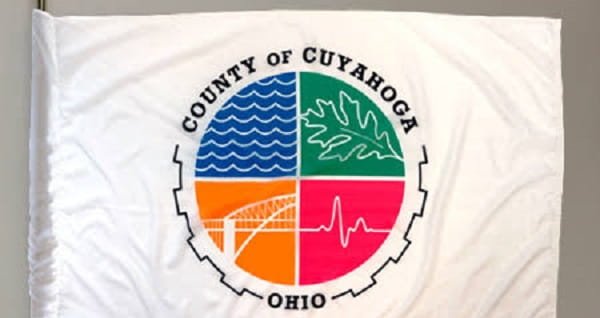
Quick Overview of Cuyahoga County
| Category | Details |
| State | Ohio |
| Region | Northeastern Ohio |
| County seat | Cleveland |
| Created | By state legislation in 1807; organised in 1810 |
| Estimated population | 1,232,925 in 2025 |
| Land area | Approximately 457 square miles |
| Local communities | 59 cities, villages and townships |
| Government system | Charter government with separate executive and legislative branches |
| County executive | Chris Ronayne |
| County Council president | Dale Miller |
| County Council vice president | Yvonne M. Conwell |
| Sheriff | Harold A. Pretel |
| Prosecuting attorney | Michael C. O’Malley |
| Fiscal officer | Michael W. Chambers |
| Clerk of Courts | Nailah K. Byrd |
| County treasurer | Brad Cromes |
| Medical examiner | Dr Thomas P. Gilson |
| Common Pleas administrative judge | Judge Michael P. Shaughnessy |
| 2026 General Fund operating expenditure | Approximately $576.3 million |
| Major industries | Healthcare, manufacturing, finance, education, professional services and logistics |
Cuyahoga County contains 59 separate communities and government jurisdictions. Its current charter structure has been operating since January 2011, when an elected County Executive and 11-member County Council replaced the former three-commissioner system.
Location and Geographic Structure
Cuyahoga County is located on the southern shore of Lake Erie. Lorain County lies to the west, Medina and Summit counties are to the south, and Geauga and Lake counties border the eastern side.
Its geography includes:
- Lake Erie shoreline
- The Cuyahoga River valley
- Dense urban neighbourhoods
- Established inner-ring suburbs
- Lower-density outer suburbs
- Industrial and logistics districts
- Parks and protected natural areas
- River valleys and floodplains
- Commercial and medical employment centres
Major road routes include:
- Interstate 71
- Interstate 77
- Interstate 80
- Interstate 90
- Interstate 271
- Interstate 480
- S. Route 6
- S. Route 20
- S. Route 42
- State Route 2
- State Route 10
- State Route 176
Cleveland forms the county’s urban centre. The eastern, western and southern suburbs contain a mixture of residential communities, industrial areas, medical institutions and commercial employment districts.
Cities, Villages and Townships
Cuyahoga County contains 59 communities, including cities, villages and two townships. Municipal boundaries are complex, and neighbouring communities may provide very different combinations of police, fire, zoning, road and utility services.
Major Municipalities
- Cleveland: County seat and principal centre for government, courts, healthcare, higher education and business
- Parma: Large residential and commercial city south of Cleveland
- Lakewood: Densely developed city along Lake Erie
- Euclid: Residential and industrial city east of Cleveland
- Cleveland Heights: Inner-ring residential and institutional centre
- Strongsville: Major suburban and commercial community
- Westlake: Western suburban business and residential centre
- North Olmsted: Retail and residential community near the airport
- Shaker Heights: Established residential city southeast of Cleveland
- North Royalton: Large southern suburban community
Other municipalities include Beachwood, Bedford, Berea, Brecksville, Broadview Heights, Brook Park, Brooklyn, Garfield Heights, Independence, Lyndhurst, Maple Heights, Mayfield Heights, Middleburg Heights, Rocky River, Solon and University Heights.
Cities and villages generally operate their own:
- Police departments
- Fire departments
- Local courts
- Planning and zoning offices
- Building departments
- Municipal streets
- Parks and recreation programmes
County government concentrates on countywide and regional responsibilities rather than serving as the ordinary municipal government for every neighbourhood.
Population and Housing
Cuyahoga County has a diverse population and a comparatively large older-adult community.
Important demographic figures include:
- Residents under 18: 19.6%
- Residents aged 65 or older: 21.5%
- Black population: 29.7%
- Asian population: 4%
- Hispanic or Latino population: 7.7%
- Foreign-born residents: 7.7%
- Veterans: 54,264
- Residents speaking another language at home: 12.3%
- Average household size: 2.20 people
Important housing figures include:
- Housing units in 2025: 616,777
- Households during 2020–2024: 554,551
- Owner-occupied housing rate: 59.4%
- Median owner-occupied home value: $195,400
- Median gross monthly rent: $1,060
- Residential building permits in 2025: 1,896
Housing conditions vary considerably. Cleveland and inner-ring communities contain many older homes, apartments and multifamily buildings. Outer suburbs generally have a greater concentration of detached homes and newer developments.
Vacant properties, ageing housing, lead hazards and neighbourhood disinvestment remain concerns in some communities. Other areas face rising prices, limited accessible housing and demand for homes near major employment centres.
Education, Income and Workforce
Cuyahoga County has a workforce connected with healthcare, manufacturing, finance, education, technology and professional services.
Approximately:
- 5% of residents aged 25 and older have completed high school.
- 5% hold a bachelor’s degree or higher.
- 7% of residents aged 16 and older participate in the civilian labour force.
- Median household income was $64,468 during 2020–2024.
- Per-capita income was $42,747.
- Around 14.9% of residents lived below the poverty line.
- Average travel time to work was 23.3 minutes.
Important educational institutions include:
- Case Western Reserve University
- Cleveland State University
- Cuyahoga Community College
- Baldwin Wallace University
- John Carroll University
- Notre Dame College
- Public school districts serving individual communities
- Career, vocational and technical training centres
School districts are separate public authorities with their own elected boards, budgets and taxing powers. They are not departments managed by the County Executive or County Council.
Economy and Employment
Cuyahoga County has one of Ohio’s largest employment bases. It recorded 31,496 employer establishments and approximately 681,543 jobs in 2023. Total annual payroll was about $47.9 billion.
Major economic sectors include:
- Healthcare and social assistance
- Advanced manufacturing
- Financial and professional services
- Higher education and research
- Construction
- Retail
- Transport and warehousing
- Food production
- Public administration
- Technology and information services
- Tourism, sports and hospitality
Healthcare is particularly important. Cleveland and surrounding communities contain major hospitals, medical schools, research centres and specialised treatment facilities.
Manufacturing remains significant, including metal production, machinery, chemicals, automotive components, food products and advanced materials. The county’s location beside Lake Erie, major railways and interstate highways also supports freight and logistics activity.
Downtown Cleveland, University Circle, Independence, Beachwood, Westlake, Solon and the airport corridor are important employment centres.
County Government Structure
Cuyahoga County has a charter government with separate executive and legislative branches.
The principal branches are:
- An elected County Executive
- An 11-member elected County Council
- The Court of Common Pleas and its divisions
- Other courts created under Ohio law
- Appointed and independently elected county officers
The charter system began operating in 2011. It replaced the former Board of County Commissioners and consolidated several previously elected offices into appointed or reorganised departments.
County Executive
Chris Ronayne serves as Cuyahoga County Executive. He took office in January 2023 and is the third executive to serve under the county’s charter government.
The County Executive is responsible for:
- Proposing the county budget
- Implementing county laws
- Appointing department directors
- Supervising executive departments
- Managing county operations
- Proposing economic-development policies
- Coordinating health and human services
- Directing emergency administration
- Negotiating contracts
- Managing county facilities
- Representing the county in regional matters
Cuyahoga County does not use a conventional appointed county-manager system. The elected County Executive acts as the chief executive and administrative authority, supported by directors, deputies and professional staff.
County Council
The County Council is the county’s legislative and taxing authority. Its 11 members represent geographic districts.
The current Council consists of:
- District 1: Patrick Kelly
- District 2 and President: Dale Miller
- District 3: Martin J. Sweeney
- District 4: Mark Casselberry
- District 5: Michael J. Gallagher
- District 6: Robert E. Schleper Jr.
- District 7 and Vice President: Yvonne M. Conwell
- District 8: Pernel Jones Jr.
- District 9: Meredith M. Turner
- District 10: Michael J. Houser Sr.
- District 11: Sunny M. Simon
The Council is responsible for:
- Passing ordinances and resolutions
- Adopting the county budget
- Approving capital projects
- Confirming selected executive appointments
- Authorising contracts
- Setting county tax policy
- Conducting committee hearings
- Monitoring executive departments
- Approving borrowing
- Representing district concerns
Dale Miller and Yvonne M. Conwell were selected as president and vice president for the 2025–2026 Council term.
County Budget
The adopted 2026 General Fund provides approximately:
- $639.3 million in operating revenue
- $576.3 million in operating expenditure
- $61.9 million in other financing uses
- $638.3 million in total cash obligations
Major General Fund spending areas include:
- Sheriff and correctional operations
- Common Pleas Court
- Prosecutor’s Office
- Juvenile Court
- Board of Elections
- Public Defender
- Information technology
- Public Works
- Medical Examiner
- General county administration
Separate levy and special-purpose funds support human services, developmental disabilities, mental-health programmes, capital projects and other legally restricted activities.
Other Important County Officers
Current county officers include:
- Prosecuting Attorney: Michael C. O’Malley
- Sheriff: Harold A. Pretel
- Fiscal Officer: Michael W. Chambers
- Clerk of Courts: Nailah K. Byrd
- County Treasurer: Brad Cromes
- Medical Examiner: Dr Thomas P. Gilson
1. Fiscal Officer
The Fiscal Officer performs several responsibilities that were once divided among different elected offices. These include:
- Property assessment
- County accounting
- Financial reporting
- Recording deeds and mortgages
- Maintaining property records
- Supporting tax administration
- Issuing selected licences
2. Clerk of Courts
Nailah K. Byrd maintains records for:
- Common Pleas General Division
- Domestic Relations Division
- Eighth District Court of Appeals
- Criminal and civil filings
- Judgments
- Court-related financial transactions
3. Prosecuting Attorney
Michael C. O’Malley leads felony criminal prosecution and provides civil legal representation to county government and qualifying county bodies.
4. Treasurer
Brad Cromes manages county funds, investments and property-tax collection and distribution functions assigned to the Treasury.
Judiciary and Court System
The Cuyahoga County Court of Common Pleas has four main divisions:
- General Division
- Domestic Relations Division
- Juvenile Division
- Probate Division
The county has 47 Common Pleas judges across these four divisions. Municipal courts operated in Cleveland and other communities handle additional local criminal, traffic and civil cases.
1. General Division
Judge Michael P. Shaughnessy serves as Administrative and Presiding Judge for a two-year term beginning 1 January 2026.
The General Division handles:
- Felony criminal cases
- Major civil lawsuits
- Property disputes
- Contract cases
- Foreclosures
- Appeals from certain administrative agencies
- Treatment and specialist court dockets
The main General Division facilities are within the Justice Center complex in downtown Cleveland.
2. Domestic Relations Division
Judge Diane M. Palos serves as Administrative Judge.
This division handles:
- Divorce
- Dissolution of marriage
- Legal separation
- Child custody
- Child support
- Domestic-violence protection orders
- Parenting and family matters
3. Juvenile Division
Judge Thomas F. O’Malley serves as Administrative Judge.
Juvenile Court handles:
- Juvenile delinquency
- Child abuse and neglect
- Dependency cases
- Custody matters
- Juvenile traffic cases
- Rehabilitation and probation programmes
4. Probate Division
Judge Anthony J. Russo serves as Presiding Judge. Judge Laura J. Gallagher also serves on the Probate Court.
Probate Court handles:
- Wills and estates
- Guardianships
- Adoptions
- Marriage licences
- Name changes
- Trust matters
- Mental-health commitments
- Land-appropriation cases
Appeals from Common Pleas and municipal courts may proceed to Ohio’s Eighth District Court of Appeals.
Public Safety and Corrections
Sheriff Harold A. Pretel leads the Cuyahoga County Sheriff’s Department.
Its responsibilities include:
- County jail operations
- Courthouse security
- Prisoner transportation
- Warrant enforcement
- Civil-process functions
- Criminal investigations
- Specialist law-enforcement support
- Cooperation with municipal police departments
Most cities and villages operate their own police and fire departments. The Sheriff’s Department therefore does not replace ordinary municipal policing throughout the county.
The Department of Public Safety and Justice Services manages programmes involving emergency communications, emergency management, victim services and regional public-safety coordination. CECOMS provides continuous emergency communication and 911-related support.
Health and Human Services
Cuyahoga County Health and Human Services includes programmes involving:
- Job and Family Services
- Children and Family Services
- Senior and Adult Services
- Child-support services
- Early-childhood programmes
- Homelessness response
- Re-entry services
- Food, medical and financial assistance
The Cuyahoga County Board of Health performs public-health functions for participating suburban communities. Cleveland maintains its own city public-health department.
MetroHealth is the county’s public safety-net hospital system. It operates hospitals, emergency departments and neighbourhood health centres throughout Cuyahoga County under its own governing structure.
Public Works and Regional Services
The Department of Public Works manages county infrastructure and facilities, including:
- Bridges
- Selected roads and highways
- Sanitary engineering
- Sewer maintenance
- Drainage projects
- County buildings
- Design and construction
- Capital improvements
- Right-of-way permits
- Infrastructure inspections
Municipal streets are generally maintained by their respective cities or villages. State highways are managed by the Ohio Department of Transportation.
Regional transit, parks, sewer treatment, libraries and port facilities may be operated by separate public authorities rather than as ordinary county departments. Residents should contact the agency that directly controls the service concerned.
Frequently Asked Questions
Q1. Is Cuyahoga County the same government as the City of Cleveland?
A: No. Cleveland has its own mayor, City Council, police, fire and municipal departments. Cuyahoga County is a separate government responsible for courts, corrections, property administration and regional services.
Q2. Does Cuyahoga County have a county manager?
A: No. The county uses an elected executive system. County Executive Chris Ronayne leads administrative departments, while the 11-member County Council serves as the legislative branch.
Q3. Which office handles property values, deeds and property taxes?
A: The Fiscal Officer handles property assessment and records deeds and mortgages. The County Treasurer collects and distributes property taxes. These offices perform different parts of the property system.
Q4. Which court handles a case in Cuyahoga County?
A: The Common Pleas General Division handles felonies and major civil cases. Domestic Relations handles divorce and family matters. Juvenile Court handles cases involving children, while Probate Court manages estates, guardianships and adoptions. Municipal courts handle many misdemeanours, traffic cases and smaller civil disputes.
Q5. Which agency provides police services?
A: Residents inside cities and villages normally receive police service from their municipal department. The Sheriff’s Department operates the county jail, protects courts, transports prisoners and performs countywide enforcement and support duties.