 By Patricia Jones
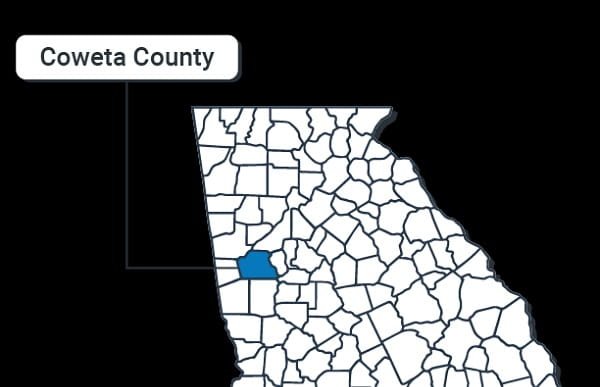
 Coweta County is a fast-growing residential, healthcare, manufacturing and commercial centre on the south-western edge of metropolitan Atlanta. It includes the City of Newnan, smaller historic municipalities, established suburban communities, industrial corridors, farmland, wooded rural areas and extensive unincorporated neighbourhoods.
Newnan is the county seat, the largest municipality and the location of the main administrative and judicial offices. The county is closely connected with Atlanta through Interstate 85, while still retaining a distinct local economy and large rural areas in its western and southern sections.
Coweta County is governed by five commissioners elected from geographic districts. The Board adopts policy and the county budget, while an appointed county administrator directs daily operations. Newnan, Senoia, Grantville and the county’s other municipalities remain separate governments with their own local responsibilities.
Quick Overview of Coweta County
| Category | Details |
| State | Georgia |
| Region | West-central Georgia and the Atlanta metropolitan area |
| County seat | Newnan |
| Created | 1826 |
| Estimated population | 160,240 in 2025 |
| Land area | Approximately 441 square miles |
| Incorporated municipalities | Eight |
| Largest city | Newnan |
| Governing body | Five-member Board of Commissioners |
| Commission chairmanship | Rotates among the five commissioners |
| County administrator | Michael Fouts |
| Main trial court | Superior Court of the Coweta Judicial Circuit |
| Superior Court chief judge | Emory Palmer |
| State Court chief judge | Seay VanPatten Poulakos |
| Sheriff | Lenn Wood |
| District attorney | John Herbert “Herb” Cranford Jr. |
| Clerk of Superior Court | Niki Sewell |
| Tax commissioner | Justin McMichael |
| Probate judge | Carrie B. Markham |
| Coroner | Richard Hawk |
| Public-use airport | Newnan-Coweta County Airport |
| Major economic sectors | Healthcare, manufacturing, retail, logistics, construction, education and professional services |
Coweta County had an estimated population of 160,240 in July 2025, representing growth of approximately 9.6% from the April 2020 population base. The county contained 62,072 housing units in 2025 and 56,275 households during the 2020-2024 reporting period.
Location and Geographic Structure
Coweta County lies south-west of Atlanta. Fulton County is to the north and north-east, Fayette County lies to the east, Spalding and Meriwether counties are to the south, Troup County is to the south-west, Heard County lies to the west and Carroll County is to the north-west.
The county forms part of Georgia’s Piedmont region. Its landscape includes rolling hills, wooded residential land, streams, small lakes, pasture, farms and expanding suburban and industrial areas. Development is heaviest around Newnan, Interstate 85, State Route 34, Sharpsburg and the eastern side of the county.
Important geographic and development areas include:
- Newnan and the central urban area
- Interstate 85 and State Route 34 commercial corridors
- Sharpsburg and rapidly growing eastern Coweta County
- Senoia and the south-eastern communities
- Grantville, Moreland and southern Coweta County
- Palmetto and the north-eastern county line
- Western rural areas towards Heard County
- Industrial districts near Newnan-Coweta County Airport
- Agricultural land, forests, streams and low-density residential communities
Interstate 85 is the county’s main regional highway and provides direct connections towards Atlanta, Hartsfield-Jackson Atlanta International Airport, LaGrange and Montgomery. U.S. Highway 29, State Routes 16, 34, 54, 70, 85, 154 and other state and county roads connect the municipalities and unincorporated communities.
The Chattahoochee River lies near the county’s north-western boundary, while the Flint River system begins east of the county. Local streams and drainage basins influence floodplain regulation, road design, stormwater management and development review.
Cities, Towns and Unincorporated Communities
Coweta County contains eight incorporated municipalities:
- Grantville
- Haralson
- Moreland
- Newnan
- Palmetto
- Senoia
- Sharpsburg
- Turin
Newnan is the county’s principal city and contains the historic downtown, major retail centres, healthcare facilities, schools, offices and residential neighbourhoods. Senoia is known for its historic centre, residential growth and film-related activity. Grantville, Moreland, Sharpsburg and Turin retain smaller-town identities, while Palmetto extends into Fulton County.
Each municipality has its own elected government and administrative structure. Municipal responsibilities may include local zoning, building permits, police protection, fire services, utilities, streets, parks, business licensing and code enforcement.
Important unincorporated communities and recognised areas include:
- Arbor Springs
- Arnco
- Cannonville
- East Newnan
- Madras
- Raymond
- Roscoe
- Sargent
- Welcome
- White Oak
Thomas Crossroads and surrounding eastern communities
A Newnan, Sharpsburg or Senoia mailing address does not always mean that a property lies inside municipal limits. Many subdivisions and rural properties use a city postal address while remaining unincorporated. Residents should confirm the actual jurisdiction before requesting police service, reporting a road problem or applying for a permit.
Population and Housing
Coweta County has grown rapidly as new residents have moved into the southern Atlanta metropolitan area. The population includes long-established rural families, suburban commuters, manufacturing and healthcare workers, retirees and people employed within Newnan or in neighbouring counties. Approximately 22.4% of residents are under 18 and 17.4% are aged 65 or older.
Important population, housing and income figures for 2020-2024 include:
- Black or African American residents: approximately 20.3%
- Hispanic or Latino residents: approximately 9.2%
- Foreign-born residents: approximately 6.6%
- Owner-occupied housing rate: 78.4%
- Median owner-occupied home value: $357,500
- Median gross monthly rent: $1,488
- Median monthly owner cost with a mortgage: $1,867
- Average household size: 2.70 people
- Median household income: $95,548
- Per-capita income: $44,463
- Residents below the poverty line: 7.3%
- Average journey to work: 29.8 minutes
- Adults with a bachelor’s degree or higher: 36.2%
Housing ranges from apartments and historic Newnan homes to townhouses, planned subdivisions, large-lot residences, farms and rural properties. Construction has been particularly active in eastern Coweta County and along the main roads connecting Newnan, Sharpsburg, Senoia and Interstate 85.
Continued growth increases demand for road improvements, schools, fire and emergency medical services, water and sewer capacity, parks and housing at different price levels. It also creates land-use questions involving traffic, stormwater, rural character, development density and the extension of public infrastructure.
Economy and Employment
Coweta County has a diversified economy supported by healthcare, manufacturing, retail, logistics, construction, education, professional services and small businesses. Its location on Interstate 85 gives employers access to Atlanta, the regional airport system and major markets across Georgia and the Southeast.
The county recorded 3,020 employer establishments and 41,689 jobs in 2023. Annual payroll exceeded $2.01 billion. Retail sales reached approximately $3.52 billion in 2022, while healthcare and social-assistance organisations generated about $1.18 billion in receipts or revenue.
Important economic and institutional assets include:
- Piedmont Newnan Hospital and a growing healthcare network
- City of Hope Atlanta and specialised medical services
- Yamaha Motor Manufacturing Corporation of America
- Industrial and distribution facilities along Interstate 85
- Newnan-Coweta County Airport and surrounding business sites
- Ashley Park and other major retail districts
- Coweta County School System and the Central Educational Center
- Historic downtown Newnan and local professional services
- Construction, real estate and property-service businesses
- Film and creative activity associated with Senoia and the surrounding region
- Agriculture, forestry and rural land services
Healthcare has become especially important as Newnan serves patients from Coweta County and surrounding parts of west Georgia. Manufacturing and logistics remain significant because of available industrial land, interstate access and proximity to the Atlanta metropolitan market.
Retail and service employment is concentrated around Newnan and the State Route 34 corridor. Tourism is smaller than in Georgia’s major destination counties, but historic districts, events, Senoia’s screen-industry connections and rural attractions support restaurants, accommodation, shopping and local businesses.
County Administration and Government
Coweta County is governed by a five-member Board of Commissioners. Each commissioner represents a geographic district and serves part-time. The Board adopts ordinances, establishes county policy, approves the annual budget, sets county tax rates, authorises contracts and acts on zoning and other public requests.
The current commissioners are:
- District 1 commissioner: Jeff Fisher
- District 2 commissioner: Bill McKenzie
- District 3 commissioner: Bob Blackburn
- District 4 commissioner: John Reidelbach
- District 5 commissioner: Al Smith
Coweta County uses a rotating chairmanship rather than electing one permanent countywide chairman. The chairman presides over meetings and performs leadership duties for the Board during the assigned period, but all five commissioners retain their votes and district responsibilities.
The Board’s role is primarily legislative and policy-based. It does not directly control every elected county office. The sheriff, tax commissioner, Superior Court clerk, coroner, judges and other constitutional or statutory officials exercise authority granted by Georgia law.
County Administrator and Administrative Leadership
Michael Fouts serves as Coweta County Administrator. He acts as the chief administrative officer for departments under the Board of Commissioners and is responsible for coordinating the day-to-day operation of county government.
The county administrator’s major responsibilities include:
- Implementing policies approved by the Board of Commissioners
- Coordinating county departments and programmes
- Preparing administrative recommendations for the Board
- Supporting development of the annual budget
- Monitoring county operations and service delivery
- Coordinating contracts, projects and intergovernmental matters
- Serving as a liaison between commissioners, departments and the public
Kelly Mickle and Sandy Wisenbaker serve as assistant administrators. Tod Handley is the Public Works Administrator, and Shannon Zerangue serves as County Clerk. Together, the administrative staff coordinates departments and carries out decisions approved by the Board.
The administrator does not manage independently elected officials or direct judicial decisions. This separation is important when residents are dealing with taxes, court records, criminal cases, elections, detention or other functions assigned to separate offices.
Other Important County Officials
Major elected and appointed office-holders include:
- Sheriff: Lenn Wood
- District attorney: John Herbert “Herb” Cranford Jr.
- Solicitor-General: Amy Godfrey
- Clerk of Superior Court: Niki Sewell
- State Court clerk: Sheila W. Echols
- Tax commissioner: Justin McMichael
- Probate judge: Carrie B. Markham
- Coroner: Richard Hawk
- Chief magistrate: James C. Stripling
- Fire chief: Robby Flanagan
- 911/EMA director: Nic Burgess
Sheriff Lenn Wood leads the Sheriff’s Office, which provides patrol and investigations in unincorporated areas, operates the county jail, serves warrants and civil papers, transports prisoners and provides court security. Municipal police departments normally handle general law enforcement inside their cities.
District Attorney Herb Cranford leads felony prosecutions for the Coweta Judicial Circuit. Solicitor-General Amy Godfrey prosecutes misdemeanour and qualifying traffic cases in Coweta County State Court. These prosecutorial offices are separate from the Board of Commissioners and county administration.
Niki Sewell maintains Superior Court records and county real-estate filings. Sheila W. Echols manages State Court records. Justin McMichael administers property-tax collection and motor-vehicle tag and title services, while Richard Hawk investigates qualifying deaths under the Georgia Death Investigation Act.
Judiciary and Court System
Coweta County is part of the Coweta Judicial Circuit, which also serves Meriwether and Troup counties. The county court system includes Superior, State, Magistrate, Probate and Juvenile courts, along with municipal courts operated by individual cities.
The Superior Court judges serving the circuit include:
- Chief Judge Emory Palmer
- Judge W. Travis Sakrison
- Judge Nina Markette Baker
- Judge C. Jephson Bendinger
- Superior Court has general jurisdiction and handles matters including:
- Felony criminal cases
- Divorce and major family-law cases
- Major civil disputes
- Equity and property-title matters
- Certain appeals and specialised court programmes
Coweta County State Court is led by Chief Judge Seay VanPatten Poulakos and also includes Judges Matthew S. Swope and John B. Cunningham. State Court handles misdemeanour criminal cases, qualifying traffic offences and civil cases within its jurisdiction.
Chief Magistrate James C. Stripling leads Magistrate Court. This court handles small civil claims, landlord-tenant disputes, dispossessory proceedings, warrants, preliminary criminal matters and other cases assigned by Georgia law.
Probate Judge Carrie B. Markham presides over an Article 6 probate court with expanded jurisdiction. Probate Court handles estates, wills, guardianships, conservatorships, marriage licences, weapons-carry licences, certain mental-health matters and other statutory proceedings.
Juvenile Court hears dependency, delinquency, traffic and other proceedings involving children and young people. Municipal courts generally hear city-ordinance violations and qualifying traffic or lower-level cases arising within their municipalities.
The Coweta County Justice Center is located at 72 Greenville Street in Newnan. Probate Court operates at 200 Court Square, and Juvenile Court is located at 78 Greenville Street. Residents should confirm the correct filing office and courtroom before travelling.
Public Safety and Emergency Services
Public-safety responsibility depends on location and function. The Coweta County Sheriff’s Office generally provides law enforcement in unincorporated areas and performs countywide duties involving the jail, courts, warrants, civil process and criminal investigations. Newnan, Senoia, Grantville and other municipalities operate police departments or local arrangements.
Coweta County Fire Rescue provides fire suppression, emergency medical services, rescue, disaster response and community risk-reduction services. Fire Chief Robby Flanagan leads the department, which operates stations across the county and responds as an all-hazards emergency organisation.
Coweta County 911/Emergency Management coordinates emergency communications, public warnings, disaster planning and multi-agency response. Nic Burgess became 911/EMA director in February 2026.
Major hazards and preparedness concerns include:
- Tornadoes and severe thunderstorms
- Flash flooding and river flooding
- Extreme heat and drought
- Winter storms and power failures
- Wildfire and brush fires
- Hazardous-material and transport incidents
- Large public-safety or public-health emergencies
The county maintains emergency plans, warning sirens and the Coweta Alerts notification system. Residents should use more than one warning method because outdoor sirens are designed mainly to alert people who are outside.
Infrastructure, Transport and Public Services
Coweta County provides regional services and municipal-type services in unincorporated areas. The responsible agency depends on whether a property lies inside a city or under county jurisdiction.
Major county responsibilities include:
- County roads, bridges, drainage and stormwater systems
- Planning, zoning and development review in unincorporated areas
- Building permits, inspections and code enforcement
- Fire rescue and emergency medical services
- 911 communications and emergency management
- Parks, recreation and community facilities
- Animal services and environmental programmes
- Elections, property assessment and tax collection
- Court facilities, detention and justice-system support
- Senior services, libraries and community programmes
- Newnan-Coweta County Airport operations and oversight
Public Works maintains roads and related infrastructure under county jurisdiction. State highways and Interstate 85 are maintained by the Georgia Department of Transportation, while incorporated municipalities are generally responsible for their local streets and municipal infrastructure.
Coweta County Community Development handles zoning, development review, building permits, inspections and code matters in unincorporated areas. A municipality normally handles these functions inside its boundaries. Applicants should confirm jurisdiction before submitting plans, paying fees or hiring a contractor.
The Newnan-Coweta County Airport is a public-use general-aviation facility supporting business travel, flight activity and economic development. Hartsfield-Jackson Atlanta International Airport is the nearest major commercial passenger airport.
Frequently Asked Questions
Q: Is every Newnan mailing address inside the City of Newnan?
A: No. Many unincorporated neighbourhoods and rural properties use a Newnan postal address. Residents should check the official parcel or jurisdiction information before contacting a city department or the county.
Q: Does Coweta County have a permanent commission chairman?
A: No. The chairmanship rotates among the five district commissioners. The Board collectively adopts county policy, while the county administrator manages daily operations under the Board’s direction.
Q: Who issues building permits in Coweta County?
A: Coweta County Community Development generally handles permits in unincorporated areas. An incorporated municipality normally issues permits within its own limits. The correct office should be confirmed before work begins.
Q: Which court handles a case in Coweta County?
A: Superior Court handles felonies, divorce and major civil or equity matters. State Court handles misdemeanours, traffic and many civil cases. Magistrate Court handles small claims, evictions, warrants and preliminary matters. Probate and Juvenile courts handle their specialised areas.
Q: Who provides police service in unincorporated Coweta County?
A: The Coweta County Sheriff’s Office generally provides law-enforcement service in unincorporated areas. Incorporated cities normally use their own police departments or local service arrangements.