 By Patricia Jones
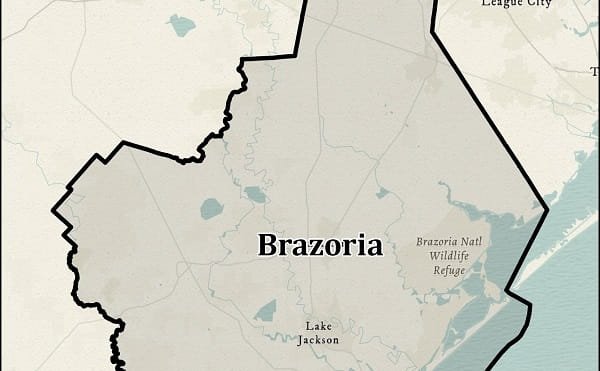
 Brazoria County is a major population, industrial, port, agricultural and coastal centre on the Texas Gulf Coast. It extends from the fast-growing southern edge of the Houston metropolitan area to the Brazosport industrial corridor, the Brazos and San Bernard river valleys, rural farmland, wetlands and Gulf of Mexico beaches.
Angleton is the county seat and the main centre of county administration and courts. Pearland is the largest city and one of the county’s principal residential, healthcare and commercial centres. Lake Jackson, Freeport, Alvin, Clute, Manvel, West Columbia and several smaller cities and towns form distinct communities across the county.
Brazoria County is governed by a Commissioners Court consisting of the county judge and four precinct commissioners. The county judge serves as the chief administrative official and director of emergency management, while independently elected officers manage law enforcement, prosecution, records, taxation, finance and other duties established by Texas law.
Quick Overview of Brazoria County
| Category | Details |
| State | Texas |
| Region | Texas Gulf Coast and Greater Houston |
| County seat | Angleton |
| Created | 1836 as one of the original counties of the Republic of Texas |
| Estimated population | 419,080 in 2025 |
| Land area | Approximately 1,363 square miles |
| Incorporated cities and towns | 24 |
| Largest city | Pearland |
| Governing body | County judge and four-member Commissioners Court |
| County judge | L.M. “Matt” Sebesta Jr. |
| Precinct 1 commissioner | Jay Burridge |
| Precinct 2 commissioner | Ryan Cade |
| Precinct 3 commissioner | Stacy L. Adams |
| Precinct 4 commissioner | David Linder |
| Chief of staff | Lacey Powell |
| Sheriff | Bo Stallman |
| Criminal district attorney | Tom Selleck |
| County clerk | Joyce Hudman |
| District clerk | Cassandra Tigner |
| Tax assessor-collector | Kristin R. Bulanek |
| County treasurer | Angela Dees |
| State district courts | 149th, 239th, 300th, 412th and 461st District Courts |
| County-level trial courts | Four County Courts at Law and Probate Courts |
| County airport | Texas Gulf Coast Regional Airport |
| Major economic sectors | Petrochemicals, energy, port operations, logistics, construction, healthcare, retail, education and agriculture |
Brazoria County had an estimated population of 419,080 in July 2025, an increase of approximately 12.6% from the April 2020 estimates base. It contained about 162,298 housing units in 2025 and reported 133,898 households during the 2020-2024 period.
Location and Geographic Structure
Brazoria County lies directly south of Houston and reaches the Gulf of Mexico. Harris County is to the north and north-east, Galveston County is to the east, Matagorda County is to the south-west, Wharton County is to the west and Fort Bend County is to the north-west. The Gulf forms the county’s south-eastern boundary.
The county has several very different geographic zones. Northern Brazoria County contains rapidly developing suburbs and commuter communities linked to Houston. Central areas include Angleton, Alvin, rural subdivisions, farms and the Brazos River corridor. The southern Brazosport area contains Lake Jackson, Clute, Freeport, large industrial facilities, port infrastructure and coastal communities.
Important geographic and development areas include:
- Pearland, Brookside Village, Manvel and the State Highway 288 growth corridor
- Alvin, Iowa Colony and developing areas in northern and north-eastern Brazoria County
- Angleton and the central county government and judicial district
- Lake Jackson, Clute, Richwood and the Brazosport urban area
- Freeport, Port Freeport and the coastal industrial corridor
- West Columbia, Brazoria, Sweeny and communities along the Brazos and San Bernard rivers
- Surfside Beach, Quintana and the Gulf coastline
- Coastal wetlands, wildlife habitat, bayous and flood-prone lowlands
- Agricultural land, cattle operations and rural residential areas
The Brazos River crosses the county before reaching the Gulf near Freeport. The San Bernard River, Chocolate Bayou, Oyster Creek and many drainage channels also influence settlement, agriculture, flood control and environmental planning. The county has approximately 23 miles of sandy Gulf beaches, along with fishing areas, bird habitat and coastal parks.
State Highway 288 is the main high-capacity route between Houston, Pearland, Angleton and the Brazosport area. The Brazoria County Expressway provides tolled lanes along part of this corridor. Other important routes include State Highways 35 and 36, State Highway 6, Farm to Market Road 2004 and the network of county roads connecting rural communities.
Cities, Towns and Unincorporated Communities
Brazoria County contains 24 incorporated cities and towns:
- Alvin
- Angleton
- Bailey’s Prairie
- Bonney
- Brazoria
- Brookside Village
- Clute
- Damon
- Danbury
- Freeport
- Hillcrest Village
- Holiday Lakes
- Iowa Colony
- Jones Creek
- Lake Jackson
- Liverpool
- Manvel
- Oyster Creek
- Pearland
- Quintana
- Richwood
- Surfside Beach
- Sweeny
- West Columbia
Pearland is the county’s largest municipality, although part of the city extends into Harris and Fort Bend counties. Other municipal boundaries and postal areas can also create confusion. A Pearland, Alvin, Angleton, Lake Jackson or Freeport mailing address does not by itself establish which city or county office has jurisdiction over a property.
Incorporated municipalities generally control local zoning, building permits, code enforcement, neighbourhood streets, parks, utilities and police services within their boundaries. The scope of service varies by city, and some functions may be provided through emergency service districts, utility districts or regional agencies.
Important unincorporated areas include communities and neighbourhoods around Rosharon, Liverpool, Chocolate Bayou, Danciger, Old Ocean, Wild Peach Village, Brazosport and the county’s rural and coastal sections. Brazoria County provides sheriff patrol, road services, floodplain administration, environmental health and development-related services in many unincorporated locations.
Population and Housing
Brazoria County has grown quickly as the Houston metropolitan area has expanded southward. Approximately 24.6% of residents are under 18, while 14.5% are aged 65 or older. Around 32.3% of residents identify as Hispanic or Latino, 18.3% as Black or African American and 8.6% as Asian. Approximately 14.6% of residents are foreign-born.
Important housing and income figures for 2020-2024 include:
- Owner-occupied housing rate: 74.1%
- Median owner-occupied home value: $301,600
- Median gross monthly rent: $1,454
- Median monthly owner cost with a mortgage: $2,331
- Average household size: 2.82 people
- Median household income: $97,993
- Per-capita income: $42,527
- Residents living below the poverty line: 9.1%
- Mean journey to work: 30.6 minutes
- Housing units in 2025: 162,298
- Residential building permits issued in 2025: 2,800
Housing ranges from apartments and established neighbourhoods to master-planned communities, suburban subdivisions, small-town homes, rural acreage, farm properties and coastal residences. New construction is especially visible around Pearland, Manvel, Iowa Colony, Alvin and the State Highway 288 corridor.
Rapid growth creates demand for road capacity, drainage improvements, schools, utilities, healthcare, emergency response and affordable housing. Coastal and river locations also require careful attention to flood zones, windstorm standards, storm-surge exposure, drainage easements and evacuation routes.
Economy and Employment
Brazoria County has a diversified economy with an unusually strong concentration of petrochemical, energy, port and industrial activity. Other important sectors include construction, logistics, healthcare, retail, education, local government, professional services, agriculture, tourism and small businesses.
The county recorded 6,650 employer establishments and 98,916 jobs in 2023. Annual payroll was approximately $5.90 billion. Retail sales reached about $6.65 billion in 2022, reflecting both a growing resident population and the county’s industrial and commercial role.
Important economic and institutional assets include:
- Port Freeport and its deep-water shipping, cargo and logistics facilities
- The Freeport, Lake Jackson, Clute and Sweeny petrochemical and energy corridor
- Dow Texas Operations and other major chemical-manufacturing facilities
- Freeport LNG and associated energy infrastructure
- Industrial complexes operated by major refining, chemical and materials companies
- State Highway 288 commercial and residential growth in Pearland and Manvel
- Healthcare facilities in Pearland, Angleton, Alvin and the Brazosport area
- Brazosport College and Alvin Community College
- Texas Gulf Coast Regional Airport
- Rice farming, cattle ranching, hay production and agricultural services
- Gulf fishing, beaches, wildlife areas and coastal recreation businesses
Port Freeport is one of the county’s most important economic engines. It supports maritime trade, industrial supply chains, vehicle and container movement, energy exports and regional logistics. The surrounding Brazosport area contains extensive chemical, materials and energy infrastructure connected to the port, railways, pipelines and the Gulf Intracoastal Waterway.
Northern Brazoria County has a different economic character. Pearland and nearby communities have expanded through healthcare, retail, professional services, construction and Houston-oriented employment. Agriculture remains important in rural sections, especially rice, cattle and land-based services, even as residential development changes parts of the county.
County Administration and Government
Brazoria County is governed by a Commissioners Court consisting of the county judge and four commissioners. The county judge is elected countywide, while each commissioner represents one geographic precinct. The Court adopts the county budget and tax rate, approves contracts, manages county property and facilities, funds roads and public services and sets policies within the authority granted by Texas law.
The current Commissioners Court members are:
- County judge: L.M. “Matt” Sebesta Jr.
- Precinct 1 commissioner: Jay Burridge
- Precinct 2 commissioner: Ryan Cade
- Precinct 3 commissioner: Stacy L. Adams
- Precinct 4 commissioner: David Linder
County Judge Sebesta presides over Commissioners Court and serves as the county’s chief administrative official and director of emergency management. The title should not be confused with the state district judges or County Court at Law judges who preside over criminal, civil, family and probate cases.
The four commissioners participate in countywide decisions and oversee precinct-level road and infrastructure concerns. Commissioners Court also appoints or supervises many department heads, establishes purchasing and financial policies and coordinates major capital projects. Its authority does not extend to directing every action of independently elected officials.
Administrative Leadership
Brazoria County does not use a conventional county-manager or elected county-executive system. Administrative responsibility is shared among the county judge, Commissioners Court, appointed department heads and independently elected county officers.
Lacey Powell serves as chief of staff in the County Judge’s Office. The office supports the county judge, policy coordination, intergovernmental work, emergency-management responsibilities, Commissioners Court business and communication with county departments and the public.
Major administrative and operational areas include:
- Budget development, accounting and financial reporting
- Purchasing, contracts and risk management
- Human resources and employee services
- County buildings, facilities and capital projects
- Engineering, roads, bridges and drainage
- Floodplain and coastal management
- Emergency management and public warning
- Environmental health and development review
- Information technology, GIS and 911 addressing
- Parks, libraries and community programmes
- Public records, elections and tax administration
Texas law assigns direct authority to several elected officers. The sheriff controls county law-enforcement and detention operations, the criminal district attorney leads state criminal prosecution, the clerks maintain court and public records, and the tax assessor-collector and treasurer perform separate financial duties. These offices cooperate with Commissioners Court but are not ordinary departments under a county manager.
Other Important County Officials
Current countywide elected officials include:
- Sheriff: Bo Stallman
- Criminal district attorney: Tom Selleck
- County clerk: Joyce Hudman
- District clerk: Cassandra Tigner
- Tax assessor-collector: Kristin R. Bulanek
- County treasurer: Angela Dees
- The county also has four elected constables:
- Precinct 1 constable: Mike Fulton
- Precinct 2 constable: Willie Howell
- Precinct 3 constable: Buck Stevens
- Precinct 4 constable: James Brawner
Sheriff Bo Stallman leads patrol, criminal investigations, detention, civil-process support, court security and other countywide law-enforcement functions. Municipal police departments serve most incorporated cities, while the Sheriff’s Office is the primary patrol agency in unincorporated areas and performs several functions throughout the county.
Criminal District Attorney Tom Selleck prosecutes felony and qualifying misdemeanour cases, supports crime victims and provides legal services assigned to the office. County Clerk Joyce Hudman maintains county-level court records, probate records, real-property documents, vital records and Commissioners Court records. District Clerk Cassandra Tigner maintains records for the state district courts.
Tax Assessor-Collector Kristin R. Bulanek handles property-tax collection and several state and local registration functions. Treasurer Angela Dees receives, safeguards and disburses county funds as authorised. The constables serve civil documents, execute court orders and perform law-enforcement duties within their precincts.
Judiciary and Court System
Brazoria County is served by five state district courts. These courts handle felony criminal cases, major civil disputes, family-law matters and other cases assigned under Texas law. Their courtrooms and principal offices are located in the Brazoria County courthouse complex in Angleton.
The current state district courts and presiding judges are:
- 149th District Court: Judge Jessica Pulcher
- 239th District Court: Judge Greg Hill
- 300th District Court: Judge Chad D. Bradshaw
- 412th District Court: Judge Justin R. Gilbert
- 461st District Court: Judge Patrick Bulanek
The district courts hear felony prosecutions, higher-value civil litigation, divorce and child-custody cases, property disputes, protective-order matters and other proceedings within their jurisdiction. Associate judges assist with selected family, civil and procedural matters. Krystal Brooks serves as a district-court administrator for criminal court operations.
Brazoria County also operates four County Courts at Law and Probate Courts:
- County Court at Law No. 1: Judge Courtney T. Gilbert
- County Court at Law No. 2: Judge Thomas Pfeiffer
- County Court at Law No. 3: Judge Jeremy E. Warren
- County Court at Law No. 4: Judge Lori Rickert
These courts handle Class A and Class B misdemeanours, probate and guardianship cases, juvenile matters, family-law proceedings, civil disputes within statutory limits and appeals from justice and municipal courts. Case assignment can vary, so parties should rely on their official notice, case number and clerk information rather than assuming which court will hear a matter.
Justice-of-the-peace courts operate in the county’s four precincts. They handle lower-value civil claims, evictions, traffic and qualifying misdemeanour cases, warrants, inquests and preliminary criminal proceedings. Municipal courts in incorporated cities generally hear ordinance violations, traffic matters and qualifying offences arising within their city limits.
Public Safety and Emergency Services
The Brazoria County Sheriff’s Office is the main law-enforcement agency for unincorporated areas. It also manages detention, warrants, civil process, investigations, specialised units and county court-security functions. Pearland, Alvin, Angleton, Lake Jackson, Freeport, Clute and several other municipalities operate their own police departments.
Fire protection and emergency medical response are provided through municipal departments, volunteer fire departments, emergency service districts and regional arrangements. The responsible agency depends on the property’s exact location, because city limits, emergency-service boundaries and postal addresses do not always match.
Major emergency-planning concerns include:
- Hurricanes and tropical storms
- Storm surge and coastal evacuation
- River, bayou and flash flooding
- Severe thunderstorms, tornadoes and lightning
- Extreme heat and drought
- Wildfires and grass fires
- Industrial and hazardous-material incidents
- Transportation, pipeline and marine emergencies
The county judge serves as director of emergency management. County Emergency Management coordinates preparedness, public warnings, evacuation information, shelter planning, disaster response and recovery with cities, school districts, industry, state agencies and federal partners. Coastal residents and people living near rivers or drainage corridors should keep current evacuation and flood information rather than relying only on past storm experience.
Infrastructure, Transport and Public Services
Brazoria County provides regional services across a large and varied territory. Some programmes operate countywide, while others apply mainly to unincorporated areas. Cities, drainage districts, utility districts, emergency service districts and state agencies may be responsible for neighbouring facilities or services.
Major county responsibilities and public services include:
- County roads, bridges and right-of-way management
- Engineering, subdivision review and infrastructure standards
- Floodplain administration and coastal management
- Drainage coordination and storm-recovery projects
- Environmental health and on-site sewage regulation
- 911 addressing and geographic information systems
- Emergency management and public-warning programmes
- Public health and community health services
- Parks, beaches, boat access and recreation sites
- Libraries and educational programmes
- Elections, voter services and public records
- Veterans’ services, housing support and community programmes
- Mosquito control and other environmental operations
Important regional transport assets include State Highway 288, the Brazoria County Expressway, State Highways 35 and 36, Port Freeport, freight railways, pipelines, the Gulf Intracoastal Waterway and Texas Gulf Coast Regional Airport. These facilities support commuter travel, industrial supply chains, maritime trade, emergency response and regional development.
The county manages several coastal and outdoor sites, including Quintana Beach, Surfside-area facilities, San Luis Pass, Follett’s Island locations and parks along rivers and bayous. Conditions can change because of tides, storms, erosion, currents and maintenance work, so visitors should check official notices before using beaches, passes, boat ramps or remote park areas.
Development requirements depend on jurisdiction and project type. A city normally handles zoning and building permits inside its boundaries. In unincorporated areas, county offices may review subdivisions, floodplain work, driveway access, drainage, on-site sewage facilities and other regulated activities. Separate approvals may also be required from drainage districts, utility providers, the state or federal agencies.
Frequently Asked Questions
Q: How can I confirm whether a property is inside a city or in unincorporated Brazoria County?
A: Do not rely only on the mailing address. Check the legal city boundary, appraisal records and an official GIS map. The answer determines which police, permitting, road, utility and code-enforcement offices have jurisdiction.
Q: Which office issues permits for construction or development?
A: A city normally handles zoning and building permits within its limits. In unincorporated areas, county review may be needed for subdivisions, floodplain work, drainage, driveways or on-site sewage. Some projects also require state, federal or district approval.
Q: Should I contact the County Clerk or the District Clerk for a court record?
A: Use the District Clerk for state district-court records, including many felony, civil and family cases. Use the County Clerk for County Court at Law, probate, property, vital and Commissioners Court records. The court name on the notice identifies the correct office.
Q: Who maintains a road or responds to a police call?
A: A city may maintain roads and provide police service within its limits. The county generally handles county roads and sheriff service in unincorporated areas, while the state maintains state highways. Private and district roads may follow different arrangements.
Q: How should residents check hurricane evacuation and flood risk?
A: Use current county and city notices, official evacuation zones and updated flood or drainage maps. Past experience does not guarantee future safety. Coastal residents should know their route, transport plan and destination before a warning is issued.